
The Only Game in Town (1790–1798)
Did you know that the US Coast Guard was the only maritime force of the newly founded United States of America from 1790 – 1798 The Continental Navy had been disbanded in 1785, so the only US warships remaining were “the Cutters”. They had several tasks: Protecting the coast and to enforce national law, especially the laws concerning tariffs.
The first commission to officer was that of Captain Hopley Yeaton of New Hampshire by President George Washington. The service itself was created in the Act of 4 August 1790.
Although the Cutter Service hired mostly former Navy personnel, the early cuttermen were paid and fed based on Army scales (cf. https://media.defense.gov/2023/Mar/23/2003185264/-1/-1/0/1987_SCHEINA_CG_AT_WAR.PDF, p. 2).
The War of 1812: Bravery and „Logbook Bullets“
It did not take long for the cutters to be involved in fights. While they pursued and arrested pirates in the early years of their service, their military role was formalized in the years 1797 and 1799. Their tasks now included the active protection of US ships near its coasts as well as the coasts itself. It was now also possible to assign US Marines to cutters (cf. https://media.defense.gov/2023/Mar/23/2003185264/-1/-1/0/1987_SCHEINA_CG_AT_WAR.PDF, p. 3). As we can see, the Cutter Service was not only a life-saving organization in its early days – essentially, it was the Navy of the USA during that time.
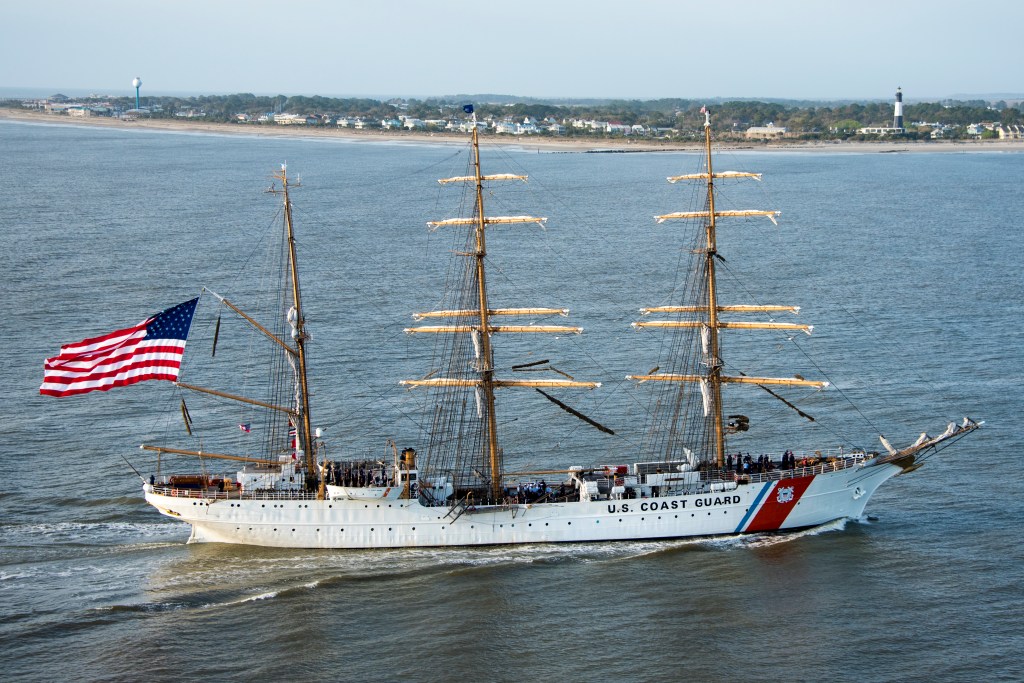
But even after the US Navy was created, the cutters took on military tasks. In the war with Great Britain 1812 the encounter of the US cutter “Eagle”, which Is used to train recruits today, with the British brig “Dispatch” became famous. The “Eagle” was run ashore on Long Island on purpose and the cuttermen pulled the guns onto a small hill, fighting the British from 9 o’clock in the morning to the late afternoon. In the end, they even used the pages of the ship’s logbook as wadding for the cannons. A brave deed, although they had to surrender eventually. Today, the USCG still uses a sailship with the name “Eagle”, to represent the Coast Guard and to train recruits. It is worth mentioning that the 1812 Eagle was not the same ship, but a smaller cutter of that era.
Civil War: The First Shots
The first shots of the Civil War, at least at sea, were fired by the cutter “Harriet Lane” when they tried to stop the steamer “Nashville” from entering Charlston Harbor without flying the flag of the USA. From 1862 to 1864 the cutters “Hercules” and “Reliance” were involved in direct fighting with Confederate troops. In 1865, cutters were involved in searching outgoing ships for the assassins of Abraham Lincoln.
It was during this time when the Cutter Service received its first official name: The Revenue Cutter Service (cf. https://media.defense.gov/2023/Mar/23/2003185264/-1/-1/0/1987_SCHEINA_CG_AT_WAR.PDF, pp. 11-12).
Modern „Firsts“ and Innovations
During the early days of World War II, the US Coast Guard focused on the protection of US waters. Soon it became involved in more far-reaching operations, especially in cold waters. In the spring of 1941 the cutter “Northland” captured the Norwegian trawler “Boskoe”, which had three German radiomen aboard – a successful act of counter-espionage and the first US naval capture of the war. (cf. https://media.defense.gov/2023/Mar/23/2003185264/-1/-1/0/1987_SCHEINA_CG_AT_WAR.PDF, pp. 19-20).
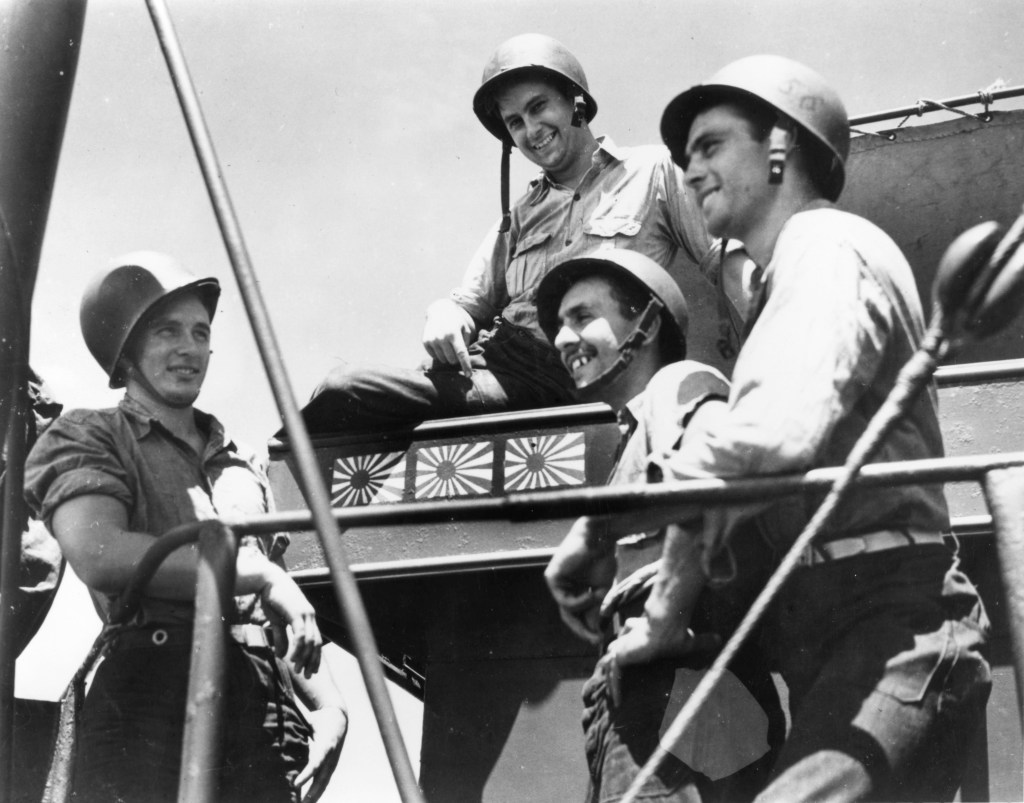
When the USA entered the war fully, the Coast Guard became part of the Navy. Tasks included the protection of convoys, hunting of enemy submarines and the assistance in landing operations. Coast Guard members also trained people in the use of amphibious vehicles.
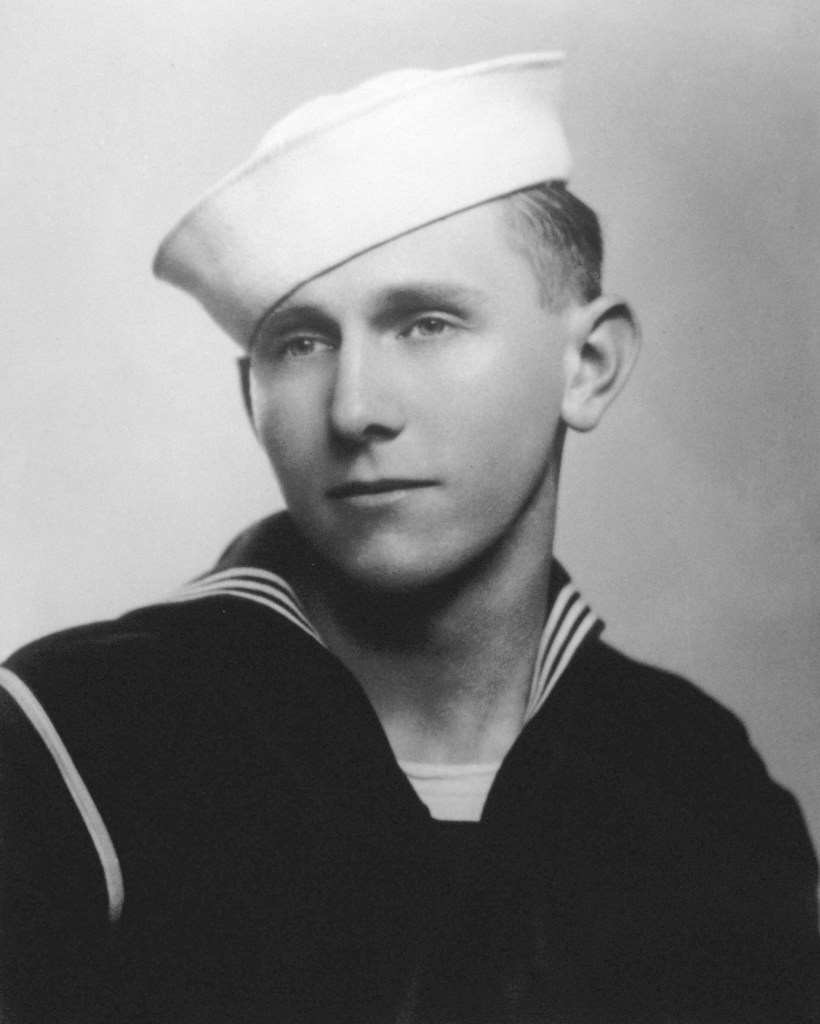
Signalman First Class Douglas Munro is distinguished in military history for his extraordinary bravery at Guadalcanal. His actions earned him the Congressional Medal of Honor, making him the only member of the Coast Guard to ever receive this prestigious award. While the service saw nearly 2,000 of its members decorated during World War II, Munro stands alone as its sole recipient of the nation’s highest military honor.
But even while being tasked with combat roles, the Coast Guard also did what it could do best – rescuing people in need. During the war they saved 1.500 survivors of torpedo-attacks in the waters near the US, 1.000 survivors were saved by cutters driving with the convoys and 1.500 were rescued during D-Day. A total of 1.918 Coast Guard members died during the war, giving the life in the fight against evil and tyranny. (cf. https://media.defense.gov/2023/Mar/23/2003185264/-1/-1/0/1987_SCHEINA_CG_AT_WAR.PDF, pp. 19-20).
Vietnam: Inshore Innovation and Port Security
In the mid-1960s, the U.S. Navy found itself lacking the shallow-water craft necessary for inshore operations in South Vietnam. To fill this critical gap, the Coast Guard deployed 26 82-foot cutters to form Squadron One, which patrolled the coast to intercept contraband and North Vietnamese vessels. These cutters spent roughly 70% of their time underway and became famous for a unique Coast Guard innovation: the „marriage“ of a .50 caliber machine gun and an 81mm mortar. This weapon system provided highly effective naval gunfire support that saved numerous friendly outposts from being overrun by the Viet Cong.
Conclusion: A Legacy of Versatility
From the first commission signed by Washington to the shallow-water patrols of the Vietnam War, the U.S. Coast Guard has proven itself to be a unique hybrid of humanitarian mercy and military might. Whether they were firing back British cannonballs or developing the 81mm mortar/machine gun marriage for riverine combat, these „cuttermen“ have consistently been the first to answer the call. The history of the Coast Guard is a reminder that being „Always Ready“ means more than just standing by—it means being the first ones in the fight when the nation needs it most.
Source: https://media.defense.gov/2023/Mar/23/2003185264/-1/-1/0/1987_SCHEINA_CG_AT_WAR.PDF


Kommentar verfassen