Semper Paratus: A Historian’s Log

About the author

Semper Paratus

Exploring overlooked episodes in Coast Guard history through concise, research‑driven essays that connect past patrols, rescues, and cutters to today’s service and its motto.
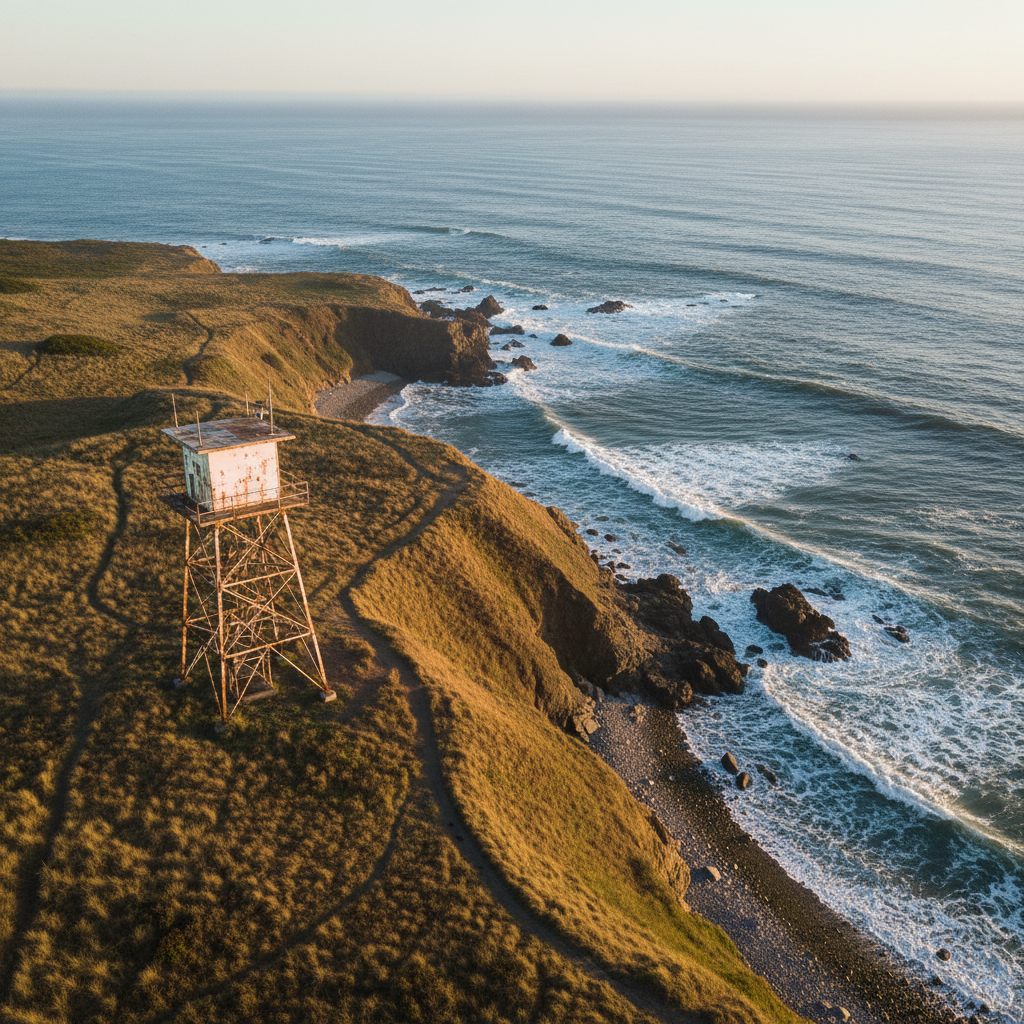

An aerial, photographic-realism view of a rugged U.S. shoreline where a decommissioned Coast Guard lookout tower stands on a grassy bluff above breaking waves. The weathered steel structure, painted white with flecks of rust, casts a long shadow over the uneven ground, crisscrossed by faint footpaths. Late-afternoon sunlight rakes across the scene, intensifying textures in the wild dune grass and jagged rocks below. The composition follows the rule of thirds, with the tower offset against the vast expanse of ocean fading into soft atmospheric haze. The mood is vigilant yet reflective, capturing the enduring presence of coastal guardianship long after specific crews and eras have passed.
A meticulously arranged historian’s workspace aboard a stationary Coast Guard cutter: an open, clothbound logbook filled with tight handwritten entries sits on a varnished chart table, flanked by a vintage parallel ruler, brass dividers, and a well-worn nautical chart of the North Atlantic. A small, enamel Coast Guard emblem paperweight anchors loose yellowed documents. Soft, directional light from an overhead red night-vision lamp casts warm, focused illumination on the writing surface, leaving the background of radar screens and muted instrument panels in gentle shadow. Photographic realism at an eye-level angle with moderate depth of field creates a professional, introspective mood suited for documenting past missions and moments.

About the author

Daniel Ossenkop, M.A. is a historian and educator. With a Master’s degree from Heinrich-Heine-Universität Düsseldorf, Daniel has authored works ranging from the siege of Neuss to the concepts of honor in Beowulf. Today, he balances his passion for History with his role as a teacher at IGS Embsen, where he focuses on History and English. His writing seeks to bridge the gap between „dusty facts“ and the vibrant, complex reality of the past, making history accessible for a modern audience.