

The Ocean is a frightening force of nature at any time of the day. But even more so in the pitch black darkness at night, when winds move the water and salt spray blinds the eyes. Above these waves, in the middle of thirty-knot winds, an MH-60T Jayhawk helicopter is hovering, the swell below running twenty feet high. Inside the illuminated cabin, an Aviation Survival Technician sits on the edge of the open door, boots hanging over the void.
A thumb goes up. The flight mechanic nods.
Then, the swimmer drops into the darkness.
To most people, jumping out of an operational aircraft into a freezing, violent ocean sounds like a nightmare. For the United States Coast Guard’s Aviation Survival Technicians (ASTs)—more commonly known as rescue swimmers—it is simply another day on watch. Their community motto is uncompromising: „So Others May Live.“ Fewer than 400 active-duty swimmers exist at any given time. Earning that title requires surviving one of the most grueling military training pipelines in the world, mastering tactical emergency medicine, and maintaining absolute calm inside absolute chaos.
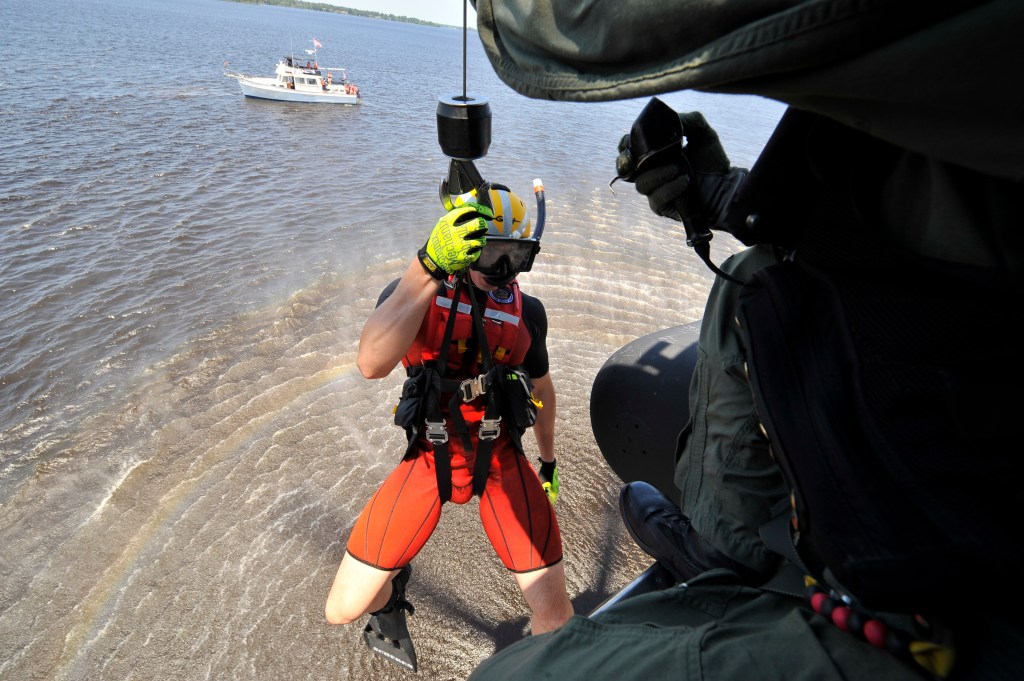
The Gauntlet: Surviving AST „A“ School
To become a USCG rescue swimmer, a candidate has to make it through the famous “A” School. When they manage to survive one of the toughest selections in the U.S. military, with an attrition rate between 75% and 85%, they get to call themselves USCG rescue swimmers. The school does not merely test whether a candidate is a fast swimmer; it tests how their brain functions when starved of oxygen, sensory-deprived, and physically exhausted. Resilience, toughness and teamwork are necessary to even have a chance to save lives in the open water.
A typical training evolution includes:
- Aquatic Stress Conditioning: Treading water for hours while holding heavy weights above the surface, enduring simulated drowning scenarios, and navigating blacked-out face masks.
- Hypoxic Training: Extreme breath-hold drills designed to build tolerance to carbon dioxide buildup, conditioning swimmers not to panic when held down by breaking surf.
- The „Multiple Panic“ Drill: Instructors simulate combative, terrified victims in the pool, actively pulling the student underwater to test defensive tactics, escape maneuvers, and surface control.
Beyond the water, students are cross-trained rigorously. ASTs are certified National Registry Emergency Medical Technicians (NREMTs) and aircraft mechanics responsible for packing parachutes, maintaining helicopter survival gear, and inspecting their own life-support systems. If an oxygen bottle fails or a harness rips at 100 feet, they have only themselves to hold accountable.
The Anatomy of an Open-Water Rescue
Every mission is an unpredictable collision of aerodynamics, oceanography, and tactical medicine. When an offshore distress call launches a crew, the rescue sequence unfolds in deliberate, high-stakes phases:
1. The Insertion
Arriving on scene, the pilot establishes a hover, typically 30 to 70 feet above the waves. Rotor wash hits the sea surface at near-hurricane speeds, creating an outward ring of stinging foam and deafening noise. The swimmer enters the water in one of two ways: a direct hoist lower via a steel cable, or a free-fall jump when sea conditions and altitude allow.
2. The Contact and Triage
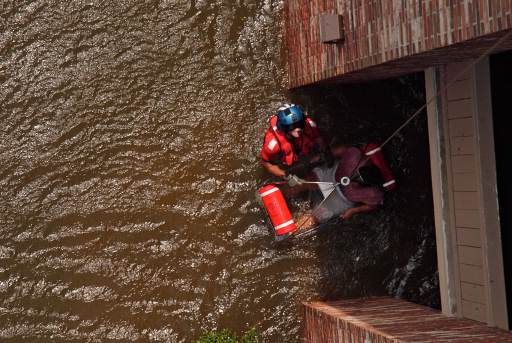
Once in the water, the swimmer must disconnect, orient themselves, and reach the victims. Survivors in open water are frequently in severe stages of hypothermia, panic, or shock. A panicking person can easily drown a rescuer if not managed correctly. Swimmers use verbal commands, cross-chest carries, or defensive releases to stabilize the victim before deploying equipment like the rescue basket, rescue sling, or litter.
3. The Hoist
Getting a hypothermic survivor out of the water carries its own physiological risks; improper hoisting can cause sudden drops in blood pressure (circum-rescue collapse). The swimmer rigs the device, signals the flight mechanic overhead, and guides the hoist cable away from ship rigging, debris, or pitching hulls. Often, the swimmer stays in the ocean alone while multiple survivors are hoisted up one by one—floating in freezing water, waiting for the hook to come back down.
Gear Tailored for Extremes
A rescue swimmer’s kit is stripped of dead weight, with every piece chosen for raw durability:
- Immersion Protection: High-mobility drysuits or thick neoprene wetsuits equipped with integrated seals to slow the onset of hypothermia in sub-freezing seas.
- Fins and Mask: Heavy-duty, high-thrust composite fins designed to power through rip currents and opposing swell while towing adult victims.
- Air and Signaling: An emergency mini-scuba cylinder (Helicopter Emergency Egress Device), high-intensity strobe lights, sea-dye markers, a serrated dive knife, and radio communications headsets wired into the aircraft interphone system.
The Human Element
High-tech helicopters, advanced avionics, and carbon-fiber rescue gear mean little when a vessel capsizes in thirty-foot seas. At that point, the entire rescue operation narrows down to a single individual swimming against the current. The Coast Guard’s rescue swimmers are not adrenaline junkies; they are quiet, calculating technicians of extreme environments. They calculate wave sets while being tossed by chop, monitor airway and circulation while being dragged through salt spray, and focus entirely on the person whose life depends on their grip. The next time a severe winter storm grounds flights and drives mariners into harbor, spare a thought for the aircrews on alert along the coast. If the horn sounds, someone will put on their fins, step to the edge of the cabin door, and drop into the waves.
Further reading:
https://aoptero.org/rescue-swimmer/rescue-swimmer-roster/ → Current RS roster


Kommentar verfassen