
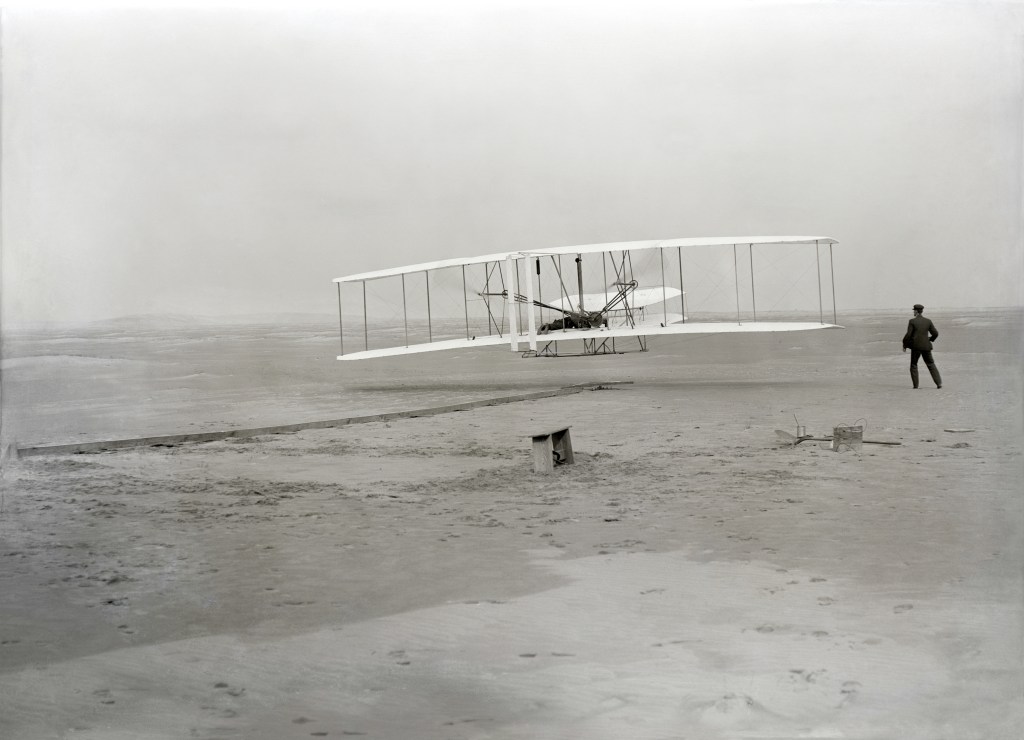
Did you know that three USCG surfmen assisted the Wright Brothers in the preflight preparations for their historic takeoff in 1903? The three coasties from the Kill Devil Hill Lifeboat Station carried the fragile plane to its launch site on 17 December. Surfman J.T. Daniels even took the famous, single photograph of the event using the Wrights‘ camera. This was the very first time the USCG encountered aviation—and it was only the beginning!
Only 12 years later, in 1915, Lieutenants Elmer Stone and Norman B. Hall proposed using aircraft for Coast Guard missions. That came as no surprise, since the Coast Guard had to cover thousands of miles of coastline, rivers, lakes, and oceans. A fast-moving aircraft sounded like a vital asset to assist in search and enforcement. With the backing of their commanding officer, Captain Benjamin Chiswell, they flew experimental flights at the Curtiss Flying School in Newport News, Virginia. Even though the early Curtiss F flying boat lacked basic navigation equipment and stayed strictly within sight of land, the two officers proved the concept.
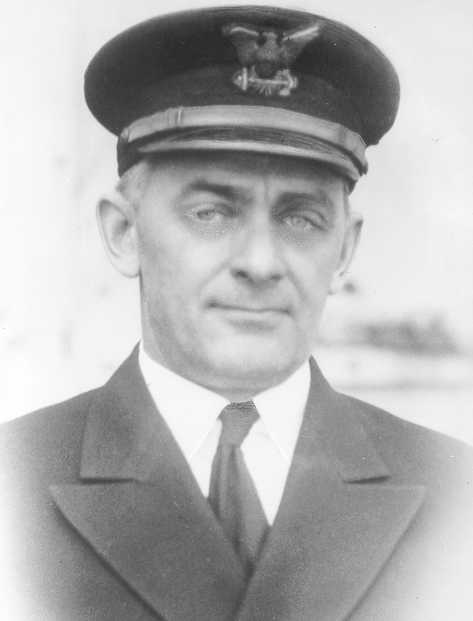
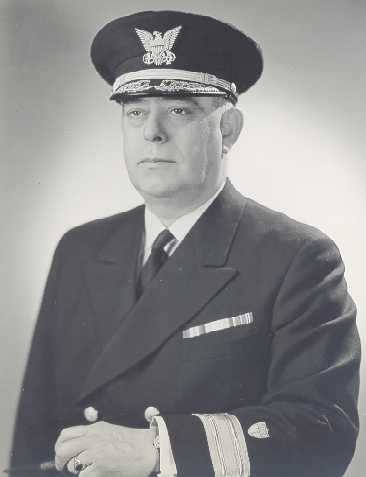
Elmer Stone and five others were subsequently assigned to the Naval Aviation School in Pensacola to train as pilots, while Lieutenant Norman Hall went to the Curtiss factory to study aeronautical engineering. In 1916, Congress authorized ten USCG air stations—though without actual funding, leaving the initiative stillborn for years.
Prohibition and the Birth of „Flying Lifeboats“
Lack of Congressional funding continued to stall Coast Guard air operations through World War I and the early 1920s. That changed dramatically in 1925 when Lieutenant Commander C.G. von Paulsen borrowed a Navy Vought UO-1 seaplane to prove the potential of spotting whiskey smugglers from the air. Prohibition had made law enforcement the dominant USCG mission. Recognizing aviation’s value, Congress appropriated $152,000 for the service’s first owned aircraft: three Loening OL-5 amphibians and two Chance Vought UO-4s.
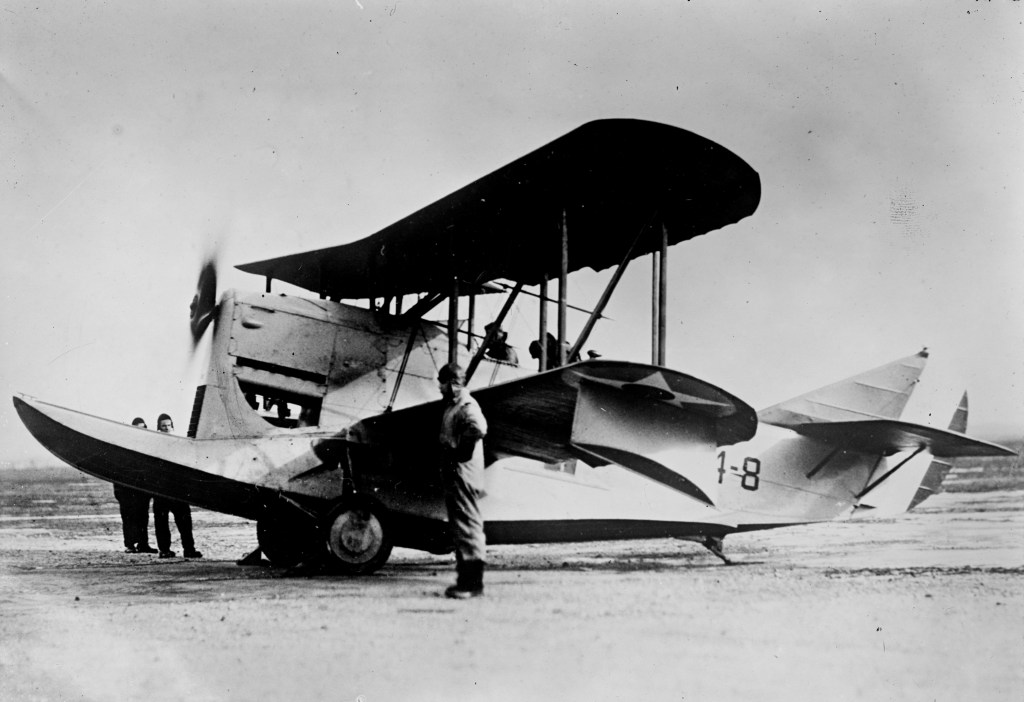
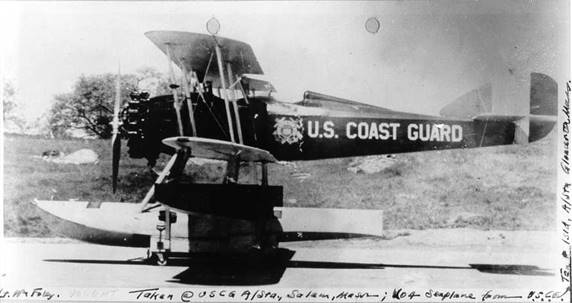
By the late 1920s, search and rescue (SAR) requirements evolved. Steam engines and steel hulls allowed merchant ships to travel trade routes much farther out to sea. When emergencies occurred, they took place far off the coast. The Coast Guard adapted by establishing an aviation section at Headquarters under Commander Norman Hall to draft specifications for a long-range „flying lifeboat“. These heavy seaplanes were built to fly hundreds of miles offshore, land in uninviting open seas, rescue survivors, and take off again. The Coast Guard acquired seven such aircraft: two modified Douglas Dolphin RD-2s and five General Aviation PJ-1 Flying Lifeboats (named after stars like Arcturus).
Simultaneously, the bond between surface ships and aviation tightened. During the 1930s, 327-foot cutters began embarking Grumman JF-2 amphibians. These aircraft were lowered into the water by boom cranes to launch patrols against opium smuggling and fisheries violations, then hoisted back onto the aft deck upon return.
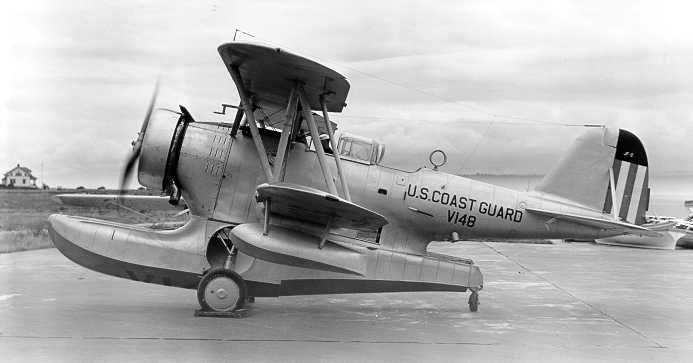
World War II: Arctic Patrols and Anti-Submarine Warfare
World War II accelerated fixed-wing developments exponentially. Coast Guard aviation played a critical role defending Greenland, where cutter-borne aircraft surveyed the coast for Allied airfields. Fixed-wing crews located and helped capture clandestine German weather stations in frozen fjords that were beaming vital weather data to Atlantic U-boats. Aircrews also conducted harrowing SAR missions for Allied bomber crews forced down on the Greenland ice cap.
Along the U.S. East Coast and Gulf of Mexico, Coast Guard aircraft patrolled relentlessly for submarines. In August 1942, Chief Aviation Pilot Henry White, flying a Grumman J4F Widgeon, successfully attacked and sank U-166 in the Gulf. Throughout the war, Coast Guard fixed-wing crews located 1,000 torpedo survivors, directed rescue ships to the scene, and directly saved another 100 survivors by making open-ocean landings.
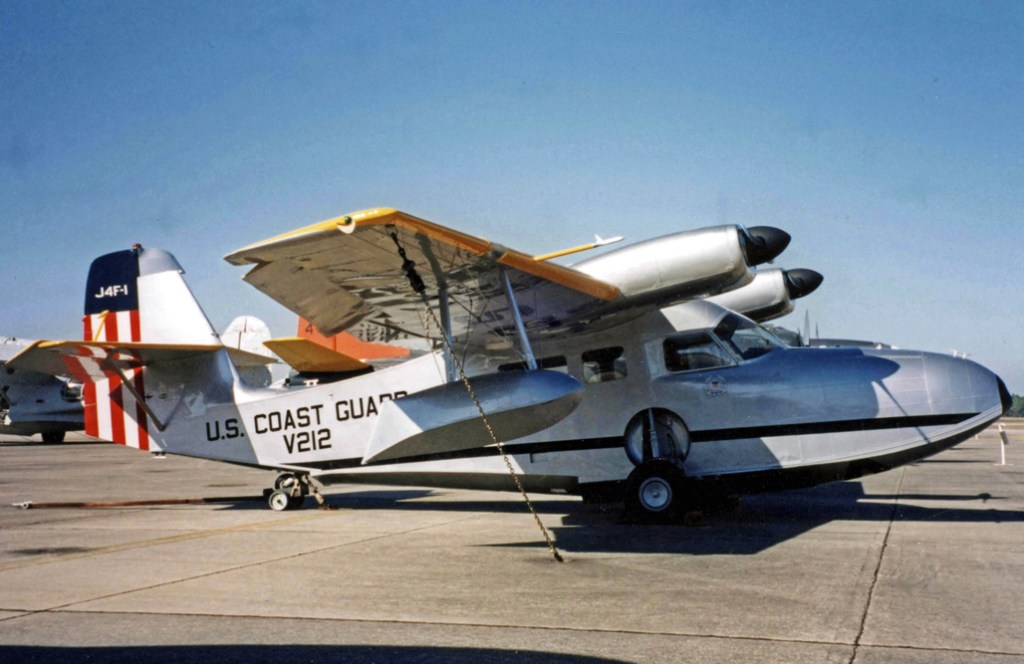
Post-War Expansion, Ice Patrols, and the Hercules
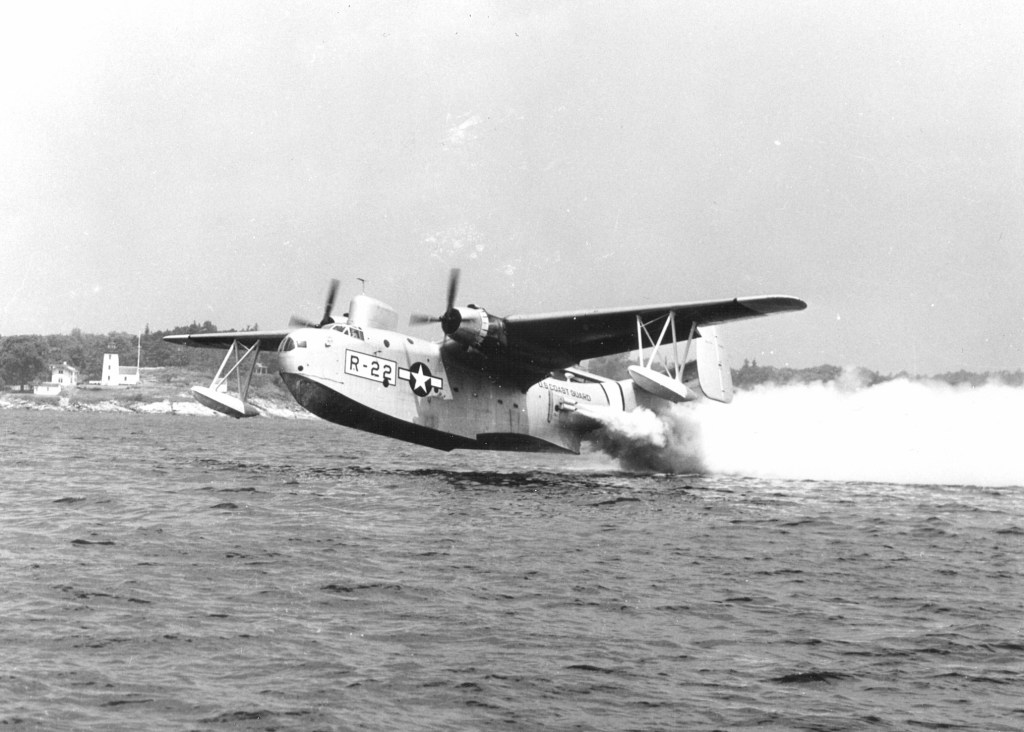
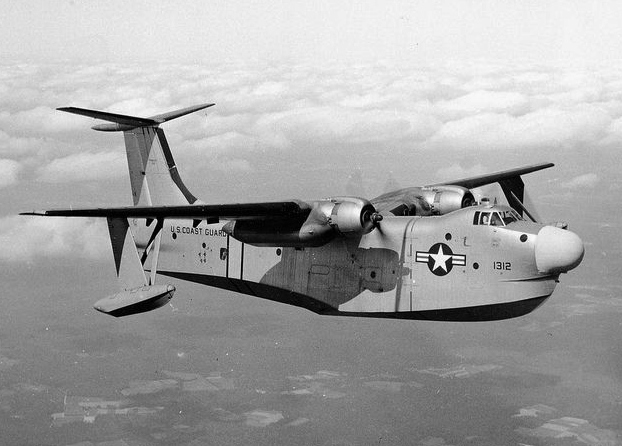
The end of World War II did not slow down the tempo of Coast Guard fixed-wing operations; instead, it expanded them. As ocean-going traffic increased, the post-war years saw the introduction of massive twin-engine flying boats like the Martin PBM-5G and P5M Marlin to handle open-ocean search and rescue and long-range ice reconnaissance. Fixed-wing crews also pioneered open-ocean ditching and escort techniques to assist troubled commercial airliners traversing the Atlantic.
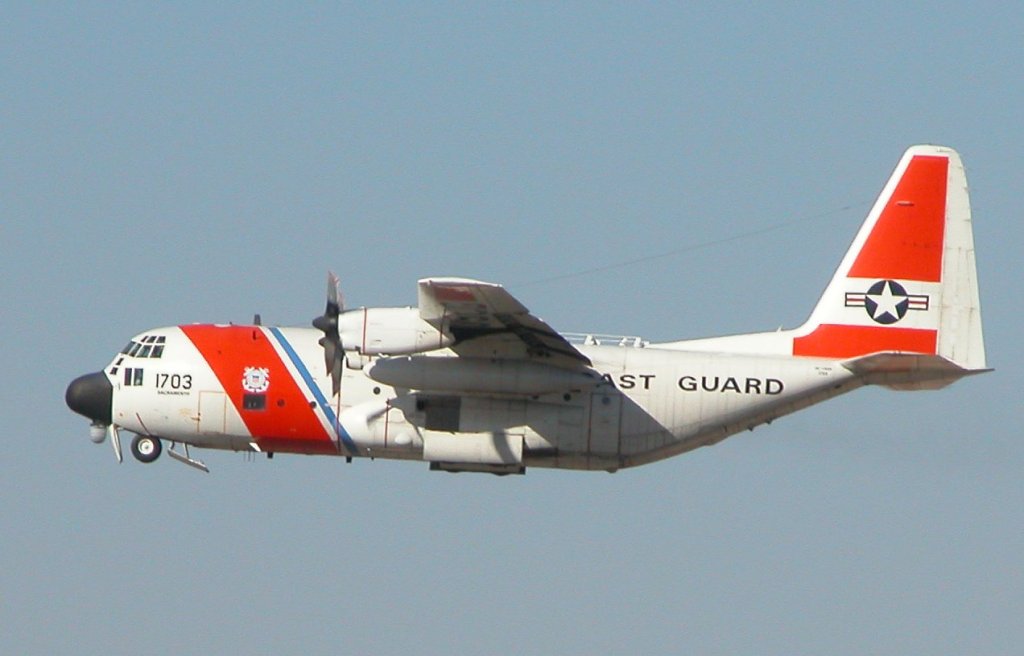
In 1959, a game-changer arrived in the Coast Guard’s inventory: the Lockheed HC-130 Hercules. Rugged, reliable, and capable of cruising on just two of its four turboprop engines to drastically extend its range, the Hercules became the undisputed backbone of Long-Range Surveillance (LRS). From tracking icebergs in the Grand Banks using Side-Looking Airborne Radar (SLAR) on the International Ice Patrol to coordinating complex offshore SAR operations, the HC-130 established an enduring legacy.
Entering the Jet Age
By the mid-1980s, the Coast Guard officially entered the Jet Age to keep pace with high-speed drug interdiction, fisheries patrols, and modern coastal defense. The service acquired 41 HU-25A Guardian fanjets, replacing aging propeller platforms like the Grumman HU-16 Albatross and Convair C-131 Samaritan. Capable of operating up to 42,000 feet at twice the speed of earlier prop aircraft, the Guardian provided a swift medium-range response.
From fragile biplanes carried across sand dunes to high-altitude fanjets and long-range turboprops, fixed-wing aviation remains the vital long-arm safeguard of the maritime skies.
References:
https://media.defense.gov/2017/Jun/26/2001769040/-1/-1/0/CGAVIATION.PDF (04.08.2026).


Kommentar verfassen