
The Vietnam War (1955–1975) was one of the deadliest conflicts for U.S. troops after the end of World War II. Today, a common myth persists that this war was strictly an Army, Marine, and Navy affair, with the U.S. Coast Guard relegated entirely to domestic shores. In reality, over 8,000 Coast Guardsmen and 56 different combatant vessels deployed to Southeast Asia during the conflict. Although their early integration was initially marred by logistical hitches and interservice miscommunications, the USCG’s presence in Vietnam ultimately proved crucial. The service provided specialized shallow-water interdiction, high-stakes combat search and rescue, and transformative humanitarian aid that other military branches simply could not replicate alone.
Section 1: The Call to Action & Early Growing Pains (1965)
The Vung Ro Incident
In February 1965, the hidden reality of communist maritime infiltration came to light in dramatic fashion:
„During February 1965, a U.S. Army pilot flying over Vung Ro Bay near Qui Nhon noticed an ‚island‘ moving slowly from one side of the bay to the other. Upon closer observation he saw the island was a carefully camouflaged ship. Air strikes were called in and the vessel sunk. Intelligence sources determined the ship was North Vietnamese and engaged in supplying enemy forces.“ — Eugene N. Tulich, USCG
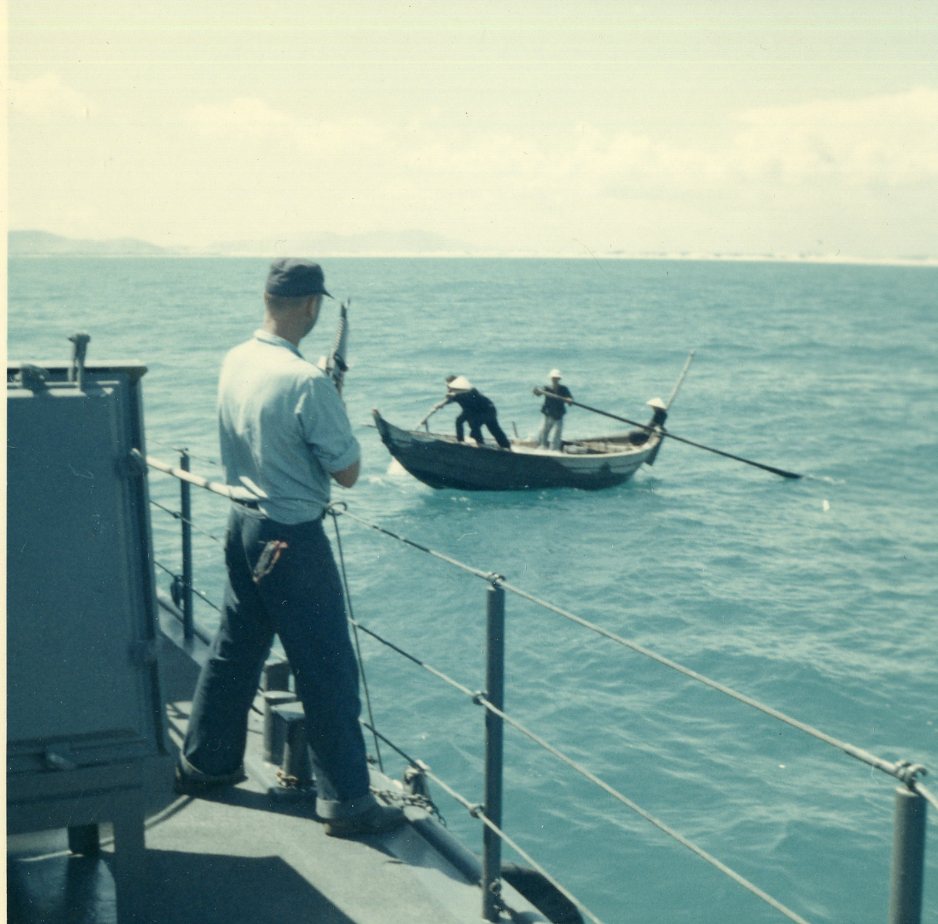
This discovery proved that a massive maritime smuggling vulnerability existed across South Vietnam’s jagged coastlines. To choke off this flow of weapons and men, an integrated surveillance network was established in March 1965 under a single command: Operation Market Time. However, the U.S. Navy and the South Vietnamese Navy lacked the necessary shallow-draft hulls to properly patrol 1,200 miles of coastline and a dense labyrinth of inland rivers. The Navy needed help, and they turned to the Coast Guard.
Section 2: Holding the Line – Squadrons One and Three
The Birth of Coast Guard Squadron One
Recognizing the critical shortage of shallow-water assets, the Secretary of the Navy reached out to the Secretary of the Treasury to gauge the availability of Coast Guard patrol craft. The Coast Guard Commandant offered 82-foot and 40-foot patrol boats, leading to an agreement with the Commander in Chief, Pacific Fleet (CINCPACFLT) to supply seventeen 82-foot cutters, backed by two Navy repair ships. Following presidential approval, the formation of Coast Guard Squadron One (RONONE) was officially announced on April 29, 1965.
Mobilization and Rigorous Training
The initial mobilization moved at a breakneck logistical pace:
- May 6, 1965: The Coast Guard officially orders the deployments.
- Just 12 days later: All 17 patrol boats are loaded onto merchant vessels spanning ports from New York and Norfolk to San Francisco and Seattle.
- May 27, 1965: At 1000 hours, Squadron One is formally commissioned at Coast Guard Base Alameda.
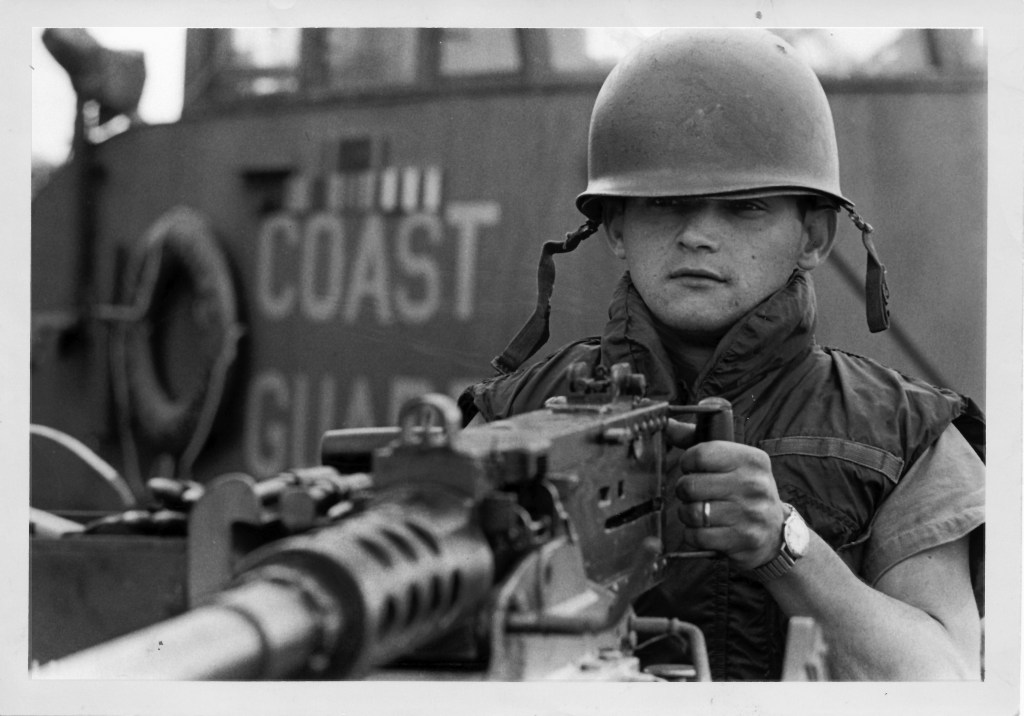
The initial roster consisted of 47 officers and 198 enlisted men. Before shipping out, these crews underwent grueling survival and tactical training at Coronado, California, to prepare them for the hazards of close-quarters coastal combat.
Squadron One Training Curriculum:
- Weapons handling (including the „care and feeding“ of the .50-caliber machine gun and 81mm mortar)
- Boarding procedures, interception tactics, and vessel recognition
- Hand-to-hand combat and combat indoctrination
- Damage control and NBC (Nuclear, Biological, Chemical) warfare
- Advanced navigation, coastal piloting, and Rules of the Road
- Water survival, radiotelephone operations, and the Military Code of Conduct
Following training, the personnel arrived at Subic Bay in the Philippines to mate with their patrol boats and prepare for active deployment to the war zone.
The Expansion of Squadron Three
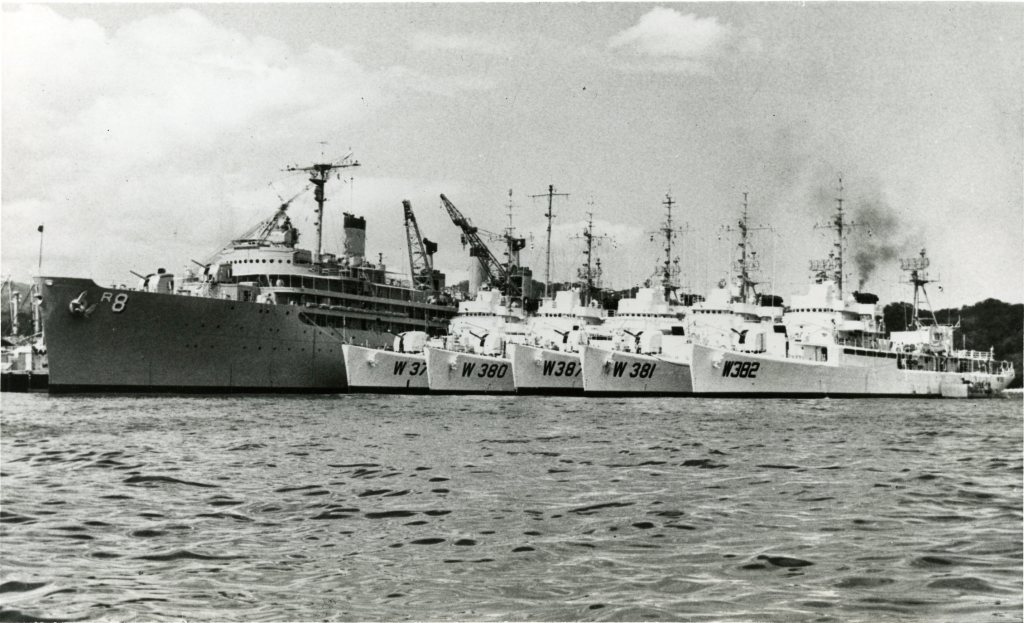
By early 1967, allied forces on Market Time patrols were being stretched to their absolute limits. The Navy formally requested that the Coast Guard provide larger assets, resulting in the establishment of Coast Guard Squadron Three (RONTHREE) at Pearl Harbor on April 24, 1967. Just two days later, the newly formed squadron sailed for Subic Bay, arriving on May 10.
Combat Operations Meet Peacetime Missions
Squadron Three made an immediate impact. On May 22, 1967, only days after leaving Subic Bay, the USCGC Barataria fired the first high-endurance cutter Naval Gunfire Support (NGFS) mission of the war. Yet, even while operating in an active combat theater, these larger ships seamlessly upheld the Coast Guard’s lifesaving heritage. The USCGC Half Moon acted as On-Scene Commander during a sweeping search for survivors of the sunken merchant ship Shinagawa Maru, while medical personnel aboard the USCGC Yakutat provided vital emergency surgery to a young Vietnamese girl suffering from a severe gunshot wound to her leg.
Section 3: Guardians of the Skies – The Aviator Exchange Program
The Call for Air Rescue Support
By 1964, President Lyndon B. Johnson recognized a desperate need for enhanced combat search and rescue (SAR) capabilities in Vietnam. He tasked the U.S. Air Force with this duty, prompting the creation of the Air Rescue Service (ARS), which relied on HH-3E „Jolly Green Giant“ helicopters, HH-43B/F choppers, and HU-16E fixed-wing aircraft. The ARS quickly faced unforgiving operational hurdles. The severe tropical climate wore heavily on the aircraft, and extracting personnel from deep within heavily fortified enemy territory placed crews in extreme peril. Facing a critical shortage of experienced helicopter pilots, Air Force officials began looking outside their branch for help, creating an opening for the uniquely qualified aviators of the USCG.
The U.S. Air Force and USCG Exchange Program
In late 1967, a formal pilot exchange program was established. Unlike Air Force pilots who often transitioned from fixed-wing aircraft without extensive helicopter backgrounds, Coast Guard aviators arrived fully qualified with years of open-ocean, water-hovering, and adverse-weather flight experience under their belts. By early 1968, Coast Guard pilots were regularly commanding Air Force HH-3E helicopters on daily rescue missions deep inside enemy lines. To counter the extreme distances separating downed pilots from allied bases, the Coast Guard also put aviators behind the controls of HC-130P aircraft to execute critical in-flight helicopter refuelings, extending the operational reach of rescue missions when every second counted.
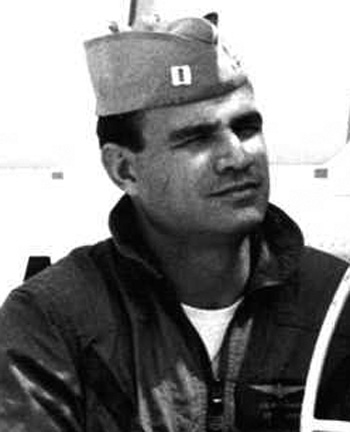
Lieutenant Jack C. Rittichier: From SAC Bomber to Coast Guard Icon
Lieutenant Jack C. Rittichier stands out as one of the most remarkable heroes of the air war. He began his military career in 1957 as a U.S. Air Force pilot with the Strategic Air Command, flying B-47 bombers. In 1962, he joined the U.S. Coast Guard, quickly distinguishing himself over the next three years during grueling domestic rescue operations amid natural disasters. When the exchange program was formed, Rittichier volunteered for duty in Vietnam, joining the 37th Aerospace Rescue and Recovery Squadron (ARRS) at Da Nang. Within a few weeks of commanding an HH-3E Jolly Green Giant, Rittichier’s extraordinary skill and bravery earned him three successive Distinguished Flying Crosses (DFCs).
The Final Mission: June 9, 1968
On June 9, 1968, Lieutenant Rittichier and his crew flew into a wall of ground fire to extract a downed Marine Corps A-4 Skyhawk pilot who was completely immobilized by a severe leg injury. Trapped beneath a dense, multi-layered jungle canopy, the Marine could only be reached via a rescue hoist. This required Rittichier to hold the massive helicopter in a stationary hover directly over the enemy positions, rendering the aircraft a defenseless target. After a previous rescue team had made three separate, unsuccessful attempts to reach the Marine, Rittichier’s crew moved in. Beaten back initially by heavy fire, they returned immediately after a supportive air strike. As they hovered to deploy the rescue line, a ferocious barrage of enemy shells riddled the chopper. Rittichier pulled maximum power to clear the tree line, but the heavily damaged aircraft erupted into flames and crashed, killing all crew members aboard. In 1996, Lieutenant Rittichier was posthumously awarded the Silver Star for his ultimate sacrifice.
Section 4: The „Other War“ – Winning Hearts and Minds
While the combat operations of Squadrons One and Three successfully choked off supply lines, the U.S. Coast Guard recognized that long-term victory required winning civilian trust and dismantling hostile influence at the grassroots level. To do this, crew members engaged in a massive, alongside humanitarian campaign to humanize American forces and directly improve local lives.
Countering Propaganda via the Island Adoption Program
In August 1966, the Coast Guard officially instituted its Island Adoption Program to counter aggressive Viet Cong propaganda campaigns. The strategy aimed to establish a direct, peaceful dialogue with local communities through four primary objectives:
- Promoting Understanding: Distributing accurate news, educational literature, and informational materials.
- Countering VC Disinformation: Disseminating factual updates to clear up negative perceptions of the allied military mission.
- Delivering Targeted Medical Aid: Treating localized outbreaks and daily ailments through dedicated civic field teams.
- Fostering Imaginative Service Projects: Engaging directly with local infrastructure to build tangible civilian-military bonds.
Coast Guardsmen frequently volunteered for hazardous shore tasks to protect and assist vulnerable populations. Crew members routinely went ashore into local villages to distribute medical supplies, construct playgrounds, and repaint community centers and orphanages. This hands-on outreach significantly reduced local resistance and cultivated crucial civilian cooperation with allied forces.
Halting the Cholera Epidemic at Song Ong Doc
The defining hour of the Coast Guard’s humanitarian mission occurred in December 1970 near the village of Song Ong Doc. U.S. forces had already abandoned their local base, leaving the regional population completely exposed to regional Viet Cong insurgent factions. When an urgent radio alert confirmed a deadly cholera outbreak in the area, the USCGC Sherman’s medical officer, Public Health Service Lieutenant Thomas Saddoris, and Chief Hospital Corpsman William Fleming requested permission to lead an emergency vaccination drive ashore. Despite the high probability of a hostile ambush, the team went inland to set up an immunization clinic.
Reflections on the Song Ong Doc Mission:
„The situation was desperate… there was a good chance that a medical team would not be attacked as the VC people would be in the lines of people waiting to get their shots. After further discussions, with great reluctance, I agreed to let the doctor and chief go in and do the immunizations.“
— Captain Paul A. Lutz, Commanding Officer, USCGC Sherman
The unselfish gamble paid off flawlessly. Operating with zero defensive cover, the medical team exhausted the ship’s entire internal vaccine reserve, successfully inoculating over 600 Vietnamese civilians and completely breaking the back of the epidemic. Both men safely returned to the cutter and were subsequently awarded the Navy Commendation Medal for their exceptional bravery and decisive impact.
Conclusion: The Vietnam Legacy & Looking Forward
The U.S. Coast Guard’s operational footprint in Vietnam officially drew to a close through a systematic process of „Vietnamization“—the phased transfer of assets and responsibilities to the Republic of South Vietnam. The crews of Squadrons One and Three did not simply drop their anchors and head home; instead, they served as instructors, running intensive dual-ship training exercises to ensure South Vietnamese sailors were fully qualified to handle the vessels on their own.
The transition marked the end of an era for both squadrons:
- August 15, 1970: The final two patrol boats of Squadron One (Point Marone and Point Cypress) are transferred, and the squadron is formally disestablished.
- December 21, 1971: The final two high-endurance cutters of Squadron Three (Cook Inlet and Castle Rock) are transferred to Saigon.
- January 31, 1972: Coast Guard Squadron Three is officially disestablished.
- May 5, 1973: The last remaining USCG personnel assigned to Vietnam depart for the United States, officially closing the chapter on the Guard’s active presence in the theater.
By the Numbers: A Legacy of Impact
The overall statistical impact of the Coast Guard’s decade-long deployment highlights a staggering level of maritime devotion and combat efficiency, as thoroughly documented in https://media.defense.gov/2020/Aug/17/2002478230/-1/-1/0/VTN_TULICH_USCG_OFFICIAL_HISTORY.PDF:
| Operational Statistic | Coast Guard Squadron One (1965–1970) | Coast Guard Squadron Three (1967–1972) |
| Total Miles Cruised | 4,215,116 miles | 1,292,094 miles |
| Vessels Detected | 838,299 | 69,517 |
| Vessels Boarded | 236,396 | 1,094 |
| Vessels Inspected | 283,527 | 50,000 |
| NGFS Missions Conducted | 4,461 missions | 1,368 missions |
In total, roughly 8,000 Coast Guardsmen served in Vietnam across 56 combatant vessels. They boarded or inspected over a quarter of a million junks and sampans, severing crucial maritime supply lines and forcing communist forces to rely heavily on the much more arduous overland Ho Chi Minh Trail.
Final Reflection
The legacy of the USCG in the Vietnam War fundamentally reshaped the identity of the service. By successfully executing military interdictions, leading highly complex aviation rescues deep in enemy territory, and managing expansive humanitarian aid programs, these men proved that the Coast Guard’s mandate is truly global. When the cutters finally returned home to ports like Boston, their hulls were no longer pristine white—they carried the grey paint of combat, the scars of the South China Sea, and a distinguished record of service that forever cemented the Coast Guard as an irreplaceable pillar of national security.
Sources:
https://media.defense.gov/2020/Aug/17/2002478230/-1/-1/0/VTN_TULICH_USCG_OFFICIAL_HISTORY.PDF
https://media.defense.gov/2023/Aug/22/2003285300/-1/-1/0/VTN_LUTZ_MEMOIR.PDF
https://media.defense.gov/2017/Jun/28/2001769725/-1/-1/0/KALISZTHOMASCGAVIATIONVTN.PDF


Kommentar verfassen