Imagine being stranded at a remote location, and the only way you could be rescued was a rescue mission carried out from the air above your head – would you prefer a plane, or a helicopter? Maybe you imagine the engine roar of a huge SAR plane, coming in at full speed. But where should it land? Or would you be gladder about a SAR helicopter, and a rescue swimmer being hoisted down to get you?
What sounds like a no-brainer today was quite the discussion in 1943. Captain Donald B. MacDiarmid, a legendary pilot who led several rescue missions in World War 2 and perfected open-seaplane-landings and takeoffs, called helicopters “mechanized Pogo sticks that were only good for county fairs and hauling Santa Claus. (Helvarg, 2009, p. 181)”. In contrast, Lt. Frank “Swede” Erickson, the army’s first helicopter pilot, argued that the helicopter was the perfect SAR asset.
This article explores the development of helicopters in the USA and their use in SAR-missions and in the U.S. Coast Guard. I will refer to “Rescue Warriors. The U.S. Coast Guard. America’s forgotten Heroes” by David Helvarg, among digital sources.
The Pioneers & The Proof of Concept
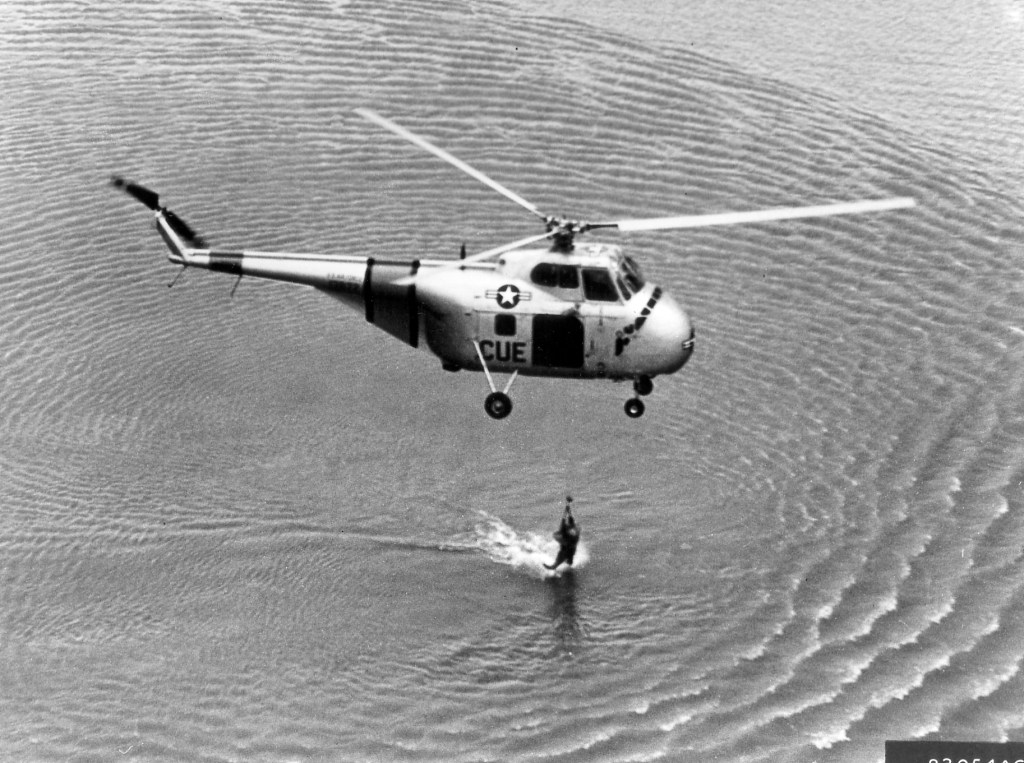
Lt. Frank “Swede” Erickson was a witness of Japan’s attack on Pearl Harbour on December 7, 1941. Seeing huge numbers of helpless sailors in the water he could not but think about the inability of the U.S. Coast Guard to rescue them at that time. When he read an article about Dr. Igor Sikorsky and his helicopters, which he had invented, he saw what others didn’t back then – he realized that stretchers could be lowered down from theses machines, picking people up even out of close quarters. Erickson was also the inventor of the rescue harness and the rescue basket. He was the first helicopter pilot to fly an actual rescue mission with a helicopter on January 3, 1944.
The real proof of concept happened in 1955, though. USCG helicopters rescued over three hundred people during the New England floods. On Christmas Eve 1955, one HO4S Chickasaw saved 138 people in Yuba City, California – also from a flood (Helvarg, 2009, p. 181.).
Those missions showed one thing clearly – the helicopter was a great SAR tool, without a doubt.
The Technical Bottlenecks
While the transition to advanced airframes solved many power and structural issues, it introduced a new, invisible challenge: the soaring cost of mechanical upkeep. Modern maritime Search and Rescue (SAR) operations place staggering physical demands on aircraft, and the data shows that keeping these lifesavers in the air requires a massive logistical tail.
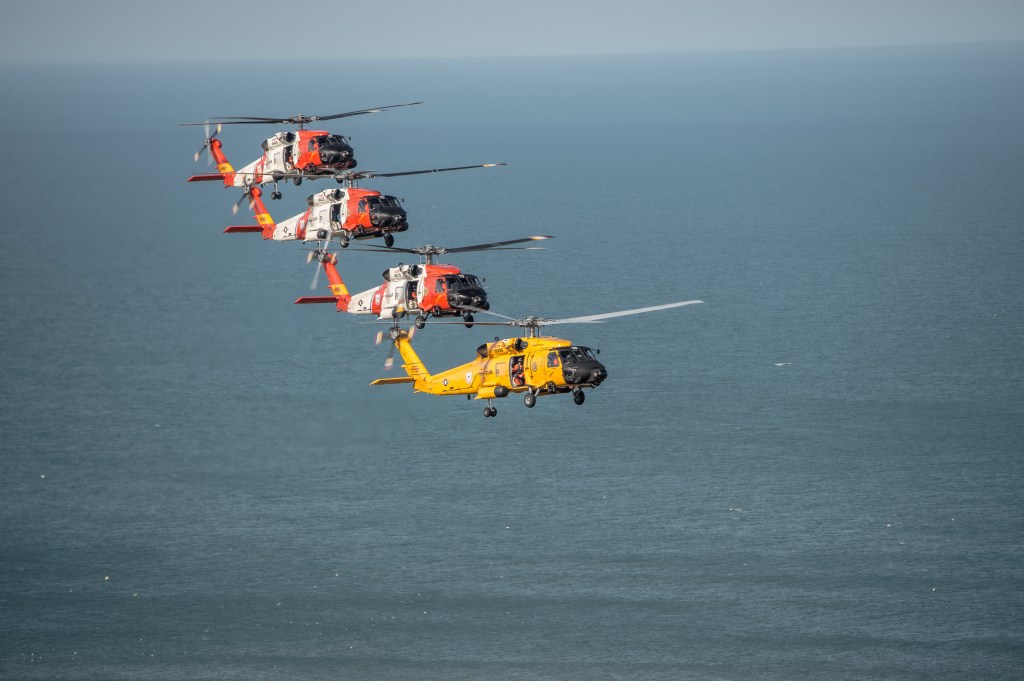
Take the Sikorsky HH-60 Jayhawk, a twin-engine medium-range recovery helicopter that has long been a fleet mainstay. The engineering reality of a sophisticated aircraft operating in high-salinity, high-stress maritime environments is starkly highlighted by its maintenance-to-flight-hour ratio:
- When New: The Jayhawk required roughly 20 hours of maintenance for every single hour it spent in the air.
- Today’s Fleet: As the airframes have aged, that burden has effectively doubled, demanding closer to 40 hours of maintenance per flight hour (Helvarg, 2009, p. 184).
The Aging Fleet Dilemma
This exponential increase in upkeep points to a critical threshold in aerospace engineering. Mechanical fatigue, structural wear, and the obsolescence of older avionics mean that technicians must spend days on the hangar floor just to clear an aircraft for a few hours of flight.
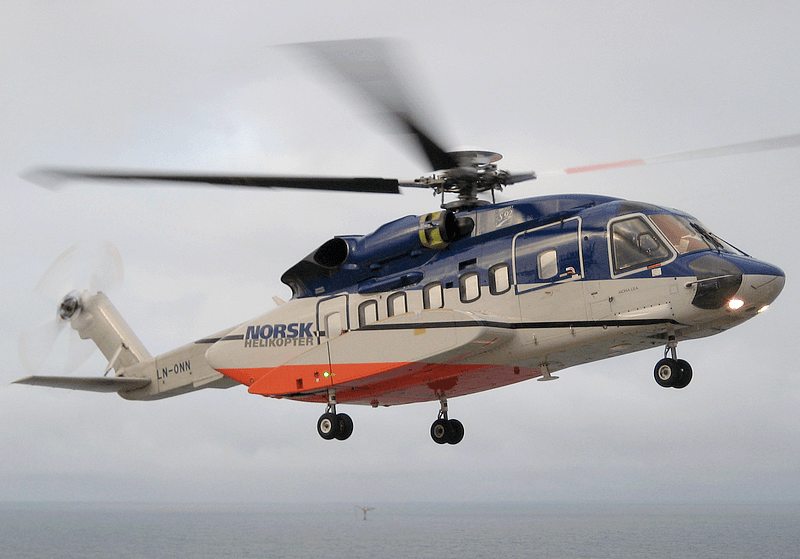
According to data from the mid-2000s, many of these active „60s“ had already flown through two-thirds of their useful operational lives (Helvarg, 2009, p. 184). For engineering teams and procurement officers, this reality triggers a mandatory shift in focus from short-term retrofitting to long-term replacement strategy. It is the reason aviation units keep schematics and pictures of next-generation aircraft—like the Sikorsky H-92 Superhawk—posted on hangar walls (Helvarg, 2009, p. 184). Much like the transition from the PBY seaplanes to early rotary aircraft, the modern Coast Guard constantly finds itself on the precipice of the next great aerodynamic evolution.
The Synthesis of Human and Machine
The trajectory of Coast Guard rotary aviation highlights a profound truth in engineering: technological triumph is rarely a linear path. It is a messy, iterative process driven by trial, error, and the uncompromising demands of survival.
The helicopter began its maritime journey burdened by intense skepticism, famously dismissed by early aviation experts as little more than a „mechanized Pogo stick“ incapable of sustained utility over open ocean (Helvarg, 2009, p. 181). Yet, through the pioneering vision of figures like Swede Erickson and the sheer persistence of engineers who refused to accept underpowered airframes or catastrophic turbine failures, the platform was meticulously re-engineered into the ultimate instrument of tactical rescue.
Today, the challenges have shifted from basic aerodynamic capability to the brutal logistics of material fatigue and aging airframes. A machine that demands forty hours of painstaking maintenance for a single hour of flight is an engineering compromise—but it is a compromise that has saved thousands of lives in conditions that would destroy any other vehicle.
Ultimately, the story of Search and Rescue aviation is not just about the physics of lift or the horsepower of a turbine. It is about the synergy between sophisticated engineering and human bravery. As the Coast Guard prepares for the next generation of aerospace design, the core mission remains unchanged: utilizing the absolute limit of aviation technology to bring order to the chaos of the sea.
References
Helvarg, D. (2009). Rescue Warriors: The U.S. Coast Guard, America’s Forgotten Heroes. St. Martin’s Press.
 Semper Paratus: A Historian’s Log
