Introduction: The Wild Northwest Frontier
In 1849, the Oregon Territory was officially created. At that time, the region was incredibly thinly populated; prior to 1846, it had been controlled by Great Britain and Spain, and its remote reaches were home to small, isolated settlements and native populations. This changed drastically in the mid-19th century when a massive wave of emigrants streamed into the territory. Triggered by the California Gold Rush, a desperate demand arose for the Pacific Northwest’s massive stands of timber to build new homes and support mining operations. In the course of these rapid changes, a booming maritime trade hit a rugged, mostly uncharted, 1,300-mile coastline plagued by dense fog, fierce gales, and treacherous rocks.
The problem was that while the sea became the primary communication and transportation link for these new settlements, there wasn’t a single lighthouse or rescue boat to protect sailors and enforce the law. The modern U.S. Coast Guard did not yet exist. Instead, it would be forged over the next century, absorbing four distinct predecessor agencies that overcame incredible environmental and human elements to tame the Pacific Northwest.
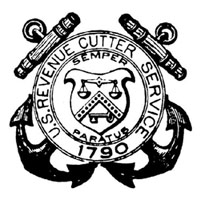
Part I: The Revenue Cutters and the War on Smugglers
With maritime business exploding, the federal government faced an urgent need to collect customs revenue and enforce federal law. In 1851, the Puget Sound Collection District was established in Olympia, Washington, before moving to Port Townsend a few years later. The district’s primary headache was rampant smuggling. The endless coves, inlets, and rivers of Puget Sound—combined with the nearby British territory—made the region a smuggler’s dream.
In response to the loss of revenue, the Treasury Department dispatched the topsail schooner Jefferson Davis, commanded by Captain William C. Pease, which sailed into Puget Sound on September 28, 1854. As the first formal predecessor unit of the Coast Guard stationed in the region, the small cutter wore many hats. It served as a troop transport during local unrest, delivered vital dispatches during the „Pig War,“ and braved fierce gales to search for mariners in distress. Because this was an era before the telegraph, confirming a shipwreck was nearly impossible, meaning the cutter frequently battled severe storms only to discover the „missing“ vessel had arrived safely days prior.
Part II: Lighting the Rocky Headlands (The Lighthouse Service)
The stormy coast remained a peril that law enforcement cutters couldn’t solve alone; a robust system of navigational aids was vital to prevent catastrophic shipwrecks. Between 1852 and 1858, the U.S. Lighthouse Service erected the region’s first sixteen recommended lighthouses, laying the foundation for maritime safety.
Building and maintaining these outposts was an grueling task. On high, rocky Tatoosh Island, the construction party had to build a defensive blockhouse due to severe tensions with local tribes, which had been exacerbated by a tragic smallpox outbreak. Even after Cape Flattery Light was commissioned there in 1857, isolation, low pay, and relentless rain caused keepers to resign in droves. It took a special breed to endure the duty, exemplified by John M. Cowen, who arrived in 1900 and stayed for over thirty-two years, once surviving a 70-mph gale that blew him end-over-end across the grass.
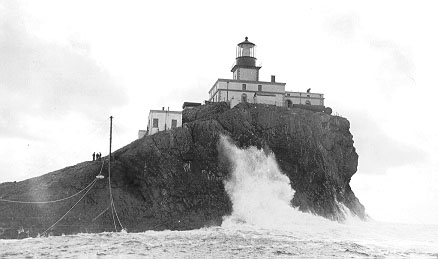
Further south lay Tillamook Rock, Oregon—one of the most dangerous engineering feats in American history. The surrounding seas were so violent that green water routinely shattered the lantern room glass 133 feet above the sea, throwing rocks, seaweed, and fish directly into the living quarters.
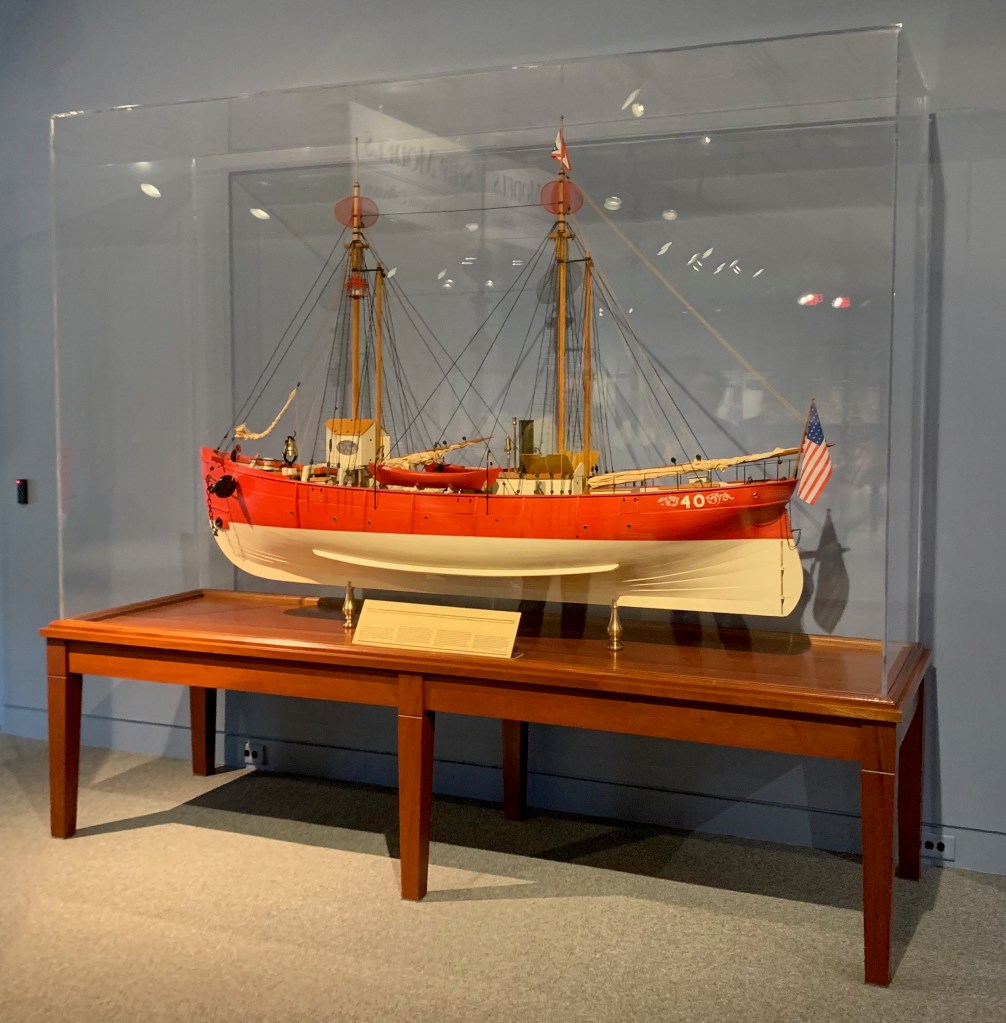
To complement these fixed structures, the Lighthouse Service utilized stationary lightships to guard treacherous shoals where permanent lighthouses couldn’t be built, as well as a fleet of mobile lighthouse tenders to keep these lonely outposts supplied. The first steam-powered tender on the West Coast, the 140-foot Shubrick, was built in 1857 and spent twenty-eight years navigating dangerous waters to aid construction and rescue ships. The work was unforgiving; lightships had to hold their positions regardless of the weather, leaving them highly vulnerable to being rammed by commercial vessels attempting to blindly feel their way through the thick northwest fog.
Part III: Steam and Surfmen (Safety & Lifesaving)
While the evolution of steam engines offered an incredible upgrade over sails, the early technology brought severe safety risks. Faulty boilers frequently exploded, causing massive loss of life and prompting a boom in federal safety regulations. To manage this, the Steamboat Inspection Service established a presence in Portland, Oregon, in 1863, later expanding to Seattle in 1871 to handle the exploding workload. By inspecting hulls and boilers and officially licensing pilots and engineers, these inspectors brought a crucial measure of order to the region’s bustling inland waterways.
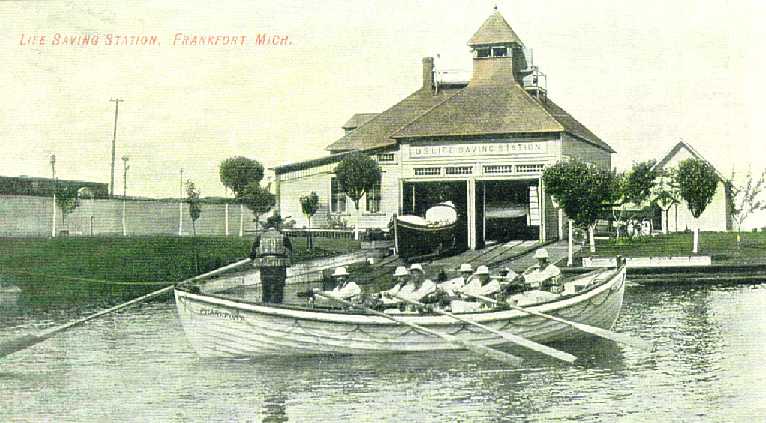
Yet, when safety regulations failed close to the beach, it was up to the heroic lifesavers to answer the call. The federal origins of the U.S. Life-Saving Service date back to 1848, but it wasn’t until 1877 that the service officially began its perilous duty in the Pacific Northwest. Tasked with rescuing mariners from catastrophic wrecks close to the shore, these early crews had to rely entirely on raw muscle, heavy oars, and sturdy ropes to battle the crashing surf. The region’s inaugural station was established at Shoalwater (later Willapa Bay) in 1877, quickly followed by vital stations at Cape Disappointment and Neah Bay in 1878. The lifesavers immediately proved their worth along these treacherous transit lanes, frequently relying on sheer technical ingenuity to pull countless sailors from the jaws of the „Pacific Graveyard“.
Part IV: Evolution into the Modern Era
In a major effort to streamline federal operations, the U.S. Revenue Cutter Service and the U.S. Life-Saving Service were amalgamated on January 15, 1915, officially creating the modern U.S. Coast Guard. The service’s responsibilities continued to expand over the following decades; it absorbed the long-standing U.S. Lighthouse Service in 1939, and permanently assumed the duties of the Bureau of Marine Inspection and Navigation between 1942 and 1946.
One of the service’s most challenging chapters came in 1920 with the passage of the Volstead Act. For fourteen years, the Coast Guard waged a relentless „Rum War“ against maritime smugglers. While the service intercepted numerous illegal shipments and high-speed contraband craft, they faced an uphill battle and could never completely stem the tide of illegal spirits. It was an incredibly thankless task that cost the service significant popularity among the public, leaving them caught in the crossfire between anti-liquor advocates frustrated by the ongoing influx and citizens who wished the country „wet“.
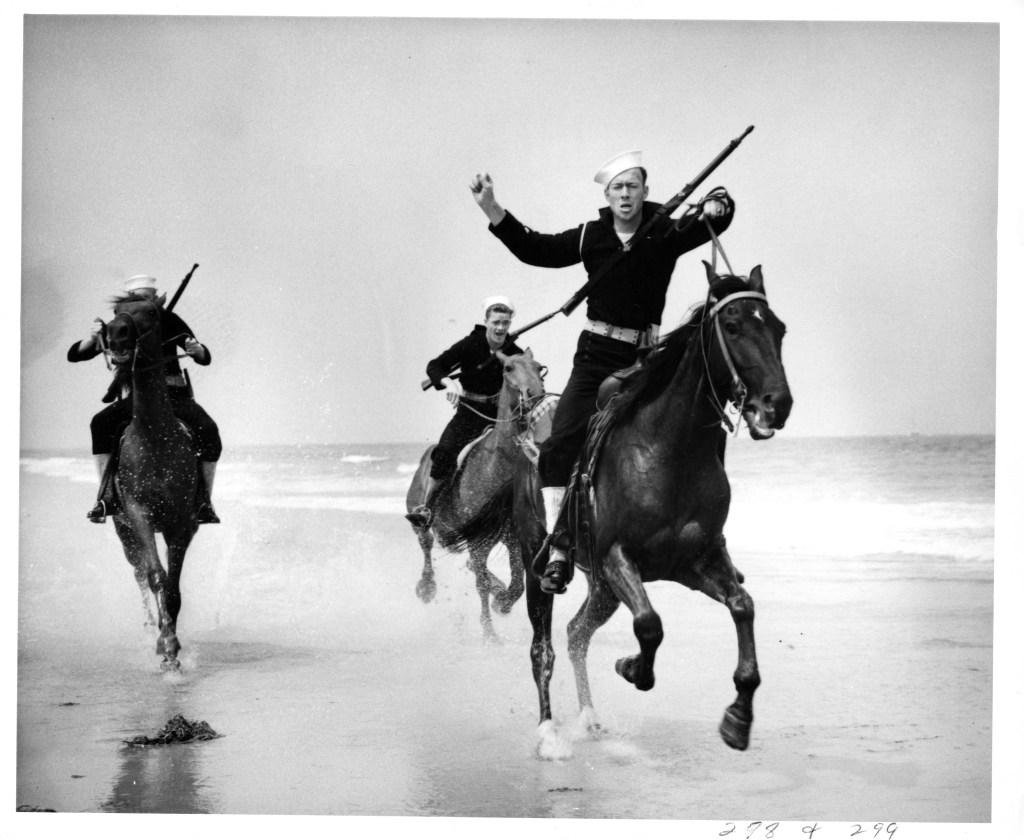
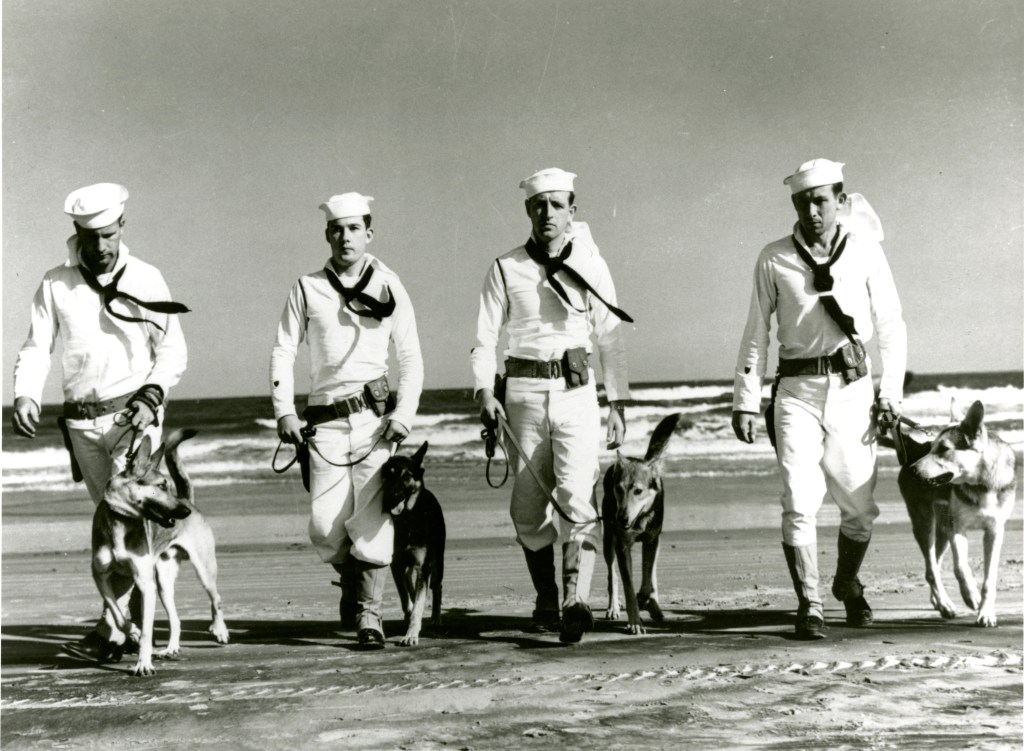
The Coast Guard’s vital role during World War II offered a stark shift in public perception. Transitioning to a wartime footing under the U.S. Navy, the service launched highly coordinated beach patrols along the nation’s coastlines. Utilizing trained dogs and mounted horses, these guardsmen kept a constant, sharp lookout across lonely stretches of sand, serving as a critical line of defense to prevent undetected enemy landings, intercept foreign saboteurs, and safeguard the home front.
Conclusion: A Modern Service Built on Historic Foundations
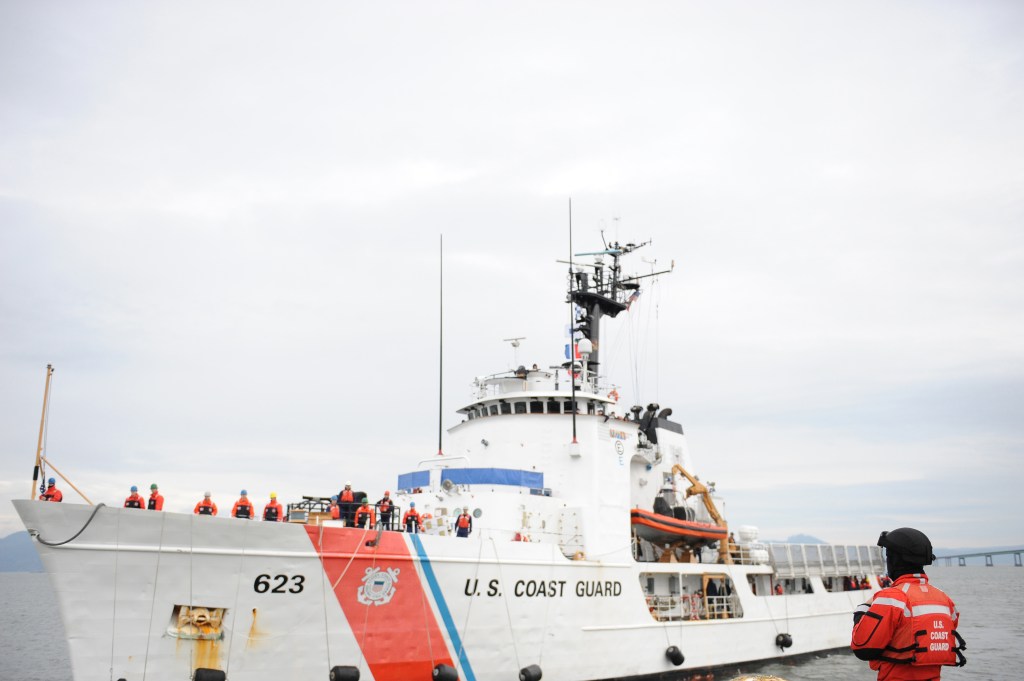
The modern, multi-faceted agency that emerged from the crucible of the Second World War was a highly adaptable force, but the latter half of the 20th century would bring a completely new challenge: a sweeping technological revolution. Rapid advancements in ship navigation and communication soon fundamentally altered how the Coast Guard safeguarded the Pacific Northwest. The most profound shift occurred at the region’s isolated outposts. As soon as the Coast Guard absorbed the Lighthouse Service, it began aggressively seeking ways to automate stations and phase out the need for manual upkeep. The legendary, isolated Tillamook Rock Lighthouse—where keepers once braved shattered glass and flying debris—was permanently disestablished in 1957. Twenty years later, in 1977, Cape Flattery Light on Tatoosh Island was automated, removing the final human elements from a site defined by a century of isolation and volatile weather. By the close of the 1980s, the era of the traditional civilian lightkeeper had officially ended across the United States, alongside the retirement of the vulnerable, stationary lightships that once anchored the coastal reefs. Yet, as technology advanced, the Coast Guard replaced its aging infrastructure with far more capable tools. In 1961, a robust 44-foot motor lifeboat was introduced to succeed the classic 36-foot workhorses. To master this powerful new craft, the service established the unique National Motor Lifeboat School at Cape Disappointment—a location where the Pacific Ocean collides violently with the Columbia River Bar to create some of the highest surf on earth. Here, coxswains from across the country still train to work calmly in environments where every human instinct screams that disaster is imminent. To expand their reach, strategic air stations were added to the region, including permanent bases at Port Angeles and Astoria. Administratively, the Coast Guard’s evolving focus on transportation and safety led to its final major structural shift in 1967, when it was transferred from its historic home in the Treasury Department to the newly created Department of Transportation. Today, the men and women of the U.S. Coast Guard deployed throughout Washington and Oregon continue to balance their dual mandates of humanitarian assistance and strict law enforcement. From executing daring maritime rescues in heavy gales to carrying out historic law enforcement milestones—such as the massive 1986 seizure of the contraband-laden ship Eagle One near Neah Bay—the contemporary service remains as vital as ever. When the topsail schooner Jefferson Davis first sailed into the misty waters of Puget Sound in 1854, it planted the seeds of a legendary legacy. Over 170 years later, the modern Coast Guard continues to carry on, refine, and surpass the courageous deeds of the surfmen, lightkeepers, and cutter captains who tamed the wild Pacific Northwest.
Sources:
https://media.defense.gov/2017/Jun/26/2001769042/-1/-1/0/CGPACNW.PDF
https://www.history.uscg.mil/Our-Collections/Documents-Publications/igphoto/2001775773
 Semper Paratus: A Historian’s Log