The Hook
In the military, every branch speaks its own language. The dialect of the U.S. Coast Guard is special, though. It not only has a long history, but it developed from a great variety of maritime traditions, mostly due to the hybrid nature of the service. The modern U.S. Coast Guard evolved from a blend of Alexander Hamilton’s Revenue Cutter Service (1790) and the gritty U.S. Life-Saving Service (1848).
Join me on a tour through some of the most interesting, compelling, and downright weird slang words used by the USCG.
Section 1: The Identity Crisis (Nicknames & Ships)
„Puddle Pirate“
The Navy’s favorite nickname for the Coast Guard is one of the best-known colloquialisms in the military. What makes it so funny is the stark contrast to the historical reality of the brutal, high-stakes life-saving operations carried out by the service. Anyone who has ever seen a 47-foot Motor Life Boat pitchpole backward into a wall of freezing surf would never call a Coastie a „puddle pirate“ with a straight face. Still, mutual teasing has been a staple of military culture since the dawn of time, and modern Coast Guardsmen have largely reclaimed the term with pride.
„Cutter“
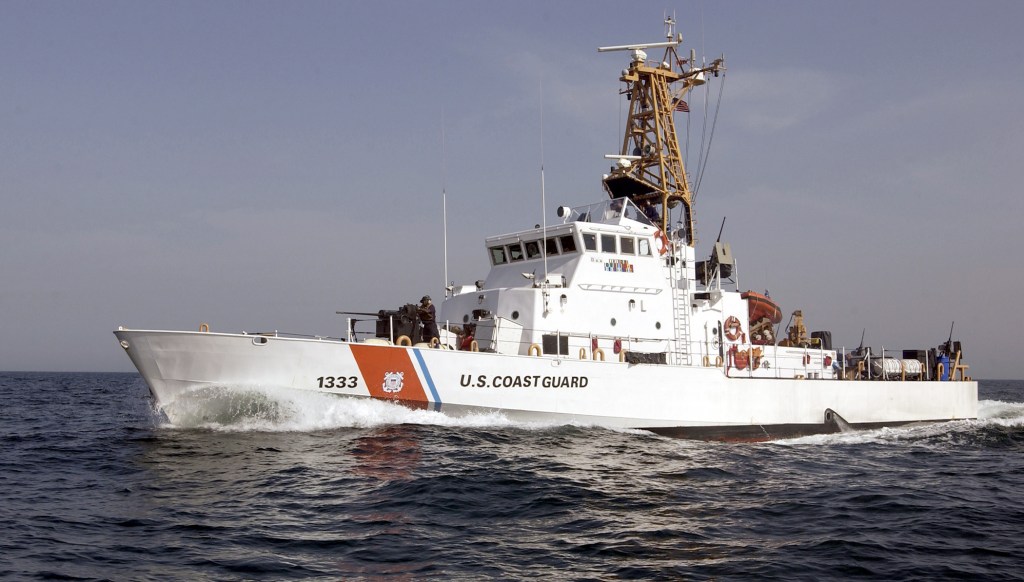
Another unique linguistic staple within the service is the word Cutter. Even today, official doctrine dictates that:
„The term ‚cutter‘ identifies a Coast Guard vessel 65 feet in length or greater, with accommodations for a crew to live aboard.“ (USCG.mil Data Sheet, 2026)
This word traces its roots directly back to Hamilton’s original ten single-masted sailing vessels. Those historic ships were physically designed to literally „cut“ through the water with maximum speed to chase down and catch agile smugglers on the run.
Section 2: Everyday Shipboard Sorcery (Life on the Water)
To understand Coast Guard culture, you have to understand that once you enlist, you never truly step foot on dry land again—at least, not psychologically. The language of the sea completely rewrites how a person perceives their physical surroundings, transforming ordinary objects into living artifacts of maritime history.
The Wooden Office: Bulkhead, Overhead, and Deck
If you walk into a recruitment office or a land-based sector headquarters in the dead-center of the American Midwest—thousands of miles from the nearest saltwater—you will not find any walls, ceilings, or floors. To a civilian, it’s a brick-and-mortar office building. To a Coast Guardsman, it is a ship.
The floor is always the deck. The ceiling is the overhead. The walls are bulkheads. This isn’t just stubborn roleplay; it’s a foundational psychological shift. The term bulkhead originally referred to the heavy upright wooden partitions built into a ship’s hull to create watertight compartments. If a hull breached, those bulkheads kept the ocean out and the crew alive. By forcing recruits to call an ordinary drywall partition a bulkhead, the service instills an immediate, instinctual spatial awareness. On duty, you are always aboard a vessel, and everyone is responsible for keeping her watertight.
„Scuttlebutt“: The Original Water Cooler
Long before corporate cubicles existed, humans still found a way to slack off, gather in small groups, and whisper about what management was doing wrong. In the modern office, we call it „water-cooler talk.“ In the maritime services, it’s scuttlebutt.
The etymology here is purely structural. On an old wooden sailing ship, a butt was a large wooden cask used to store fresh water. A scuttle was a small hole intentionally cut into a deck or a hatchway. Therefore, the scuttlebutt was a fresh-water barrel that had been tapped (scuttled) so the crew could pitch in with a ladle and get a drink.
Because it was the only place on a strict, grueling voyage where sailors from different watches could legitimately pause for a quick break, it naturally became the ship’s informational clearinghouse. Sailors traded wild rumors about upcoming port calls, complained about the rations, and swapped tall tales. Over the centuries, the wooden barrel disappeared, replaced by modern drinking fountains, but the word survived. When a Coastie tells you they heard some juicy scuttlebutt, they are participating in a tradition as old as Alexander Hamilton’s first fleet.
„Charlie Noble“: The Legend of the Polished Smokestack
If you look at the galley (kitchen) exhaust pipe sticking out of a Coast Guard cutter, you are looking at Charlie Noble. To anyone else, it’s a chimney. To a sailor, it’s a monument to one man’s obsessive-compulsive neatness.
The phrase dates back to the mid-19th century and is widely attributed to a British merchant captain named Charles Noble. Captain Noble was a man possessed by a fanatical desire for shipboard symmetry and cleanliness. Upon taking command of a new vessel, he noticed that the exhaust funnel coming from the galley’s cookstove was made of solid copper. While a normal captain would let the soot and sea spray turn the pipe a dull green, Noble ordered his crew to polish the copper chimney until it shone like a mirror. The grueling, soot-stained, highly frustrating task of polishing a working chimney became a legendary running joke across the Atlantic. Soon, any galley smokestack was universally dubbed a „Charlie Noble.“ Today, the Coast Guard still uses the name, serving as a daily reminder that in the maritime world, if it moves, you salute it; if it doesn’t, you polish it.
Section 3: The Human Measure
„Fathom“
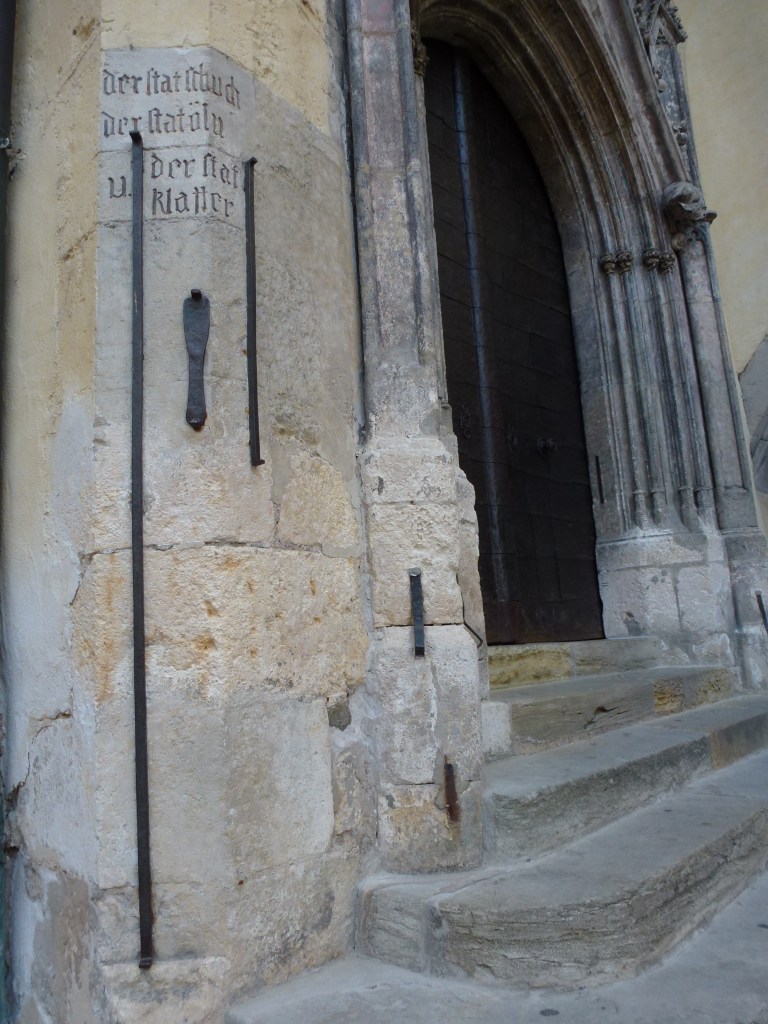
he word Fathom is still heavily in use today, officially defined as:
„…a unit of length in the imperial and U.S. customary systems equal to 6 feet (1.8288 m), used especially for measuring the depth of water.“ (Wikipedia, 2026)
But long before it was standardized on digital depth sounders, a fathom had a profoundly human origin. It comes from the Old English word faethm, meaning „embracing arms.“ In the days of sail, deep-sea depth sounding was done entirely by hand. A sailor would drop a weighted lead line over the side of the ship and then haul it back in, stretching the rope hand-to-hand across his chest. The average span of an adult man’s outstretched arms is roughly six feet—the literal length of a human embrace.
Section 4: The Scale of Bureaucratic Despair (The Acronyms)
Things go wrong in life—and in the military, they go wrong in very specific degrees. To survive the grinding gears of modern administrative chaos, maritime service members rely on a highly specialized weapon: pitch-black, cynical humor. Nowhere is this more evident than in how a crew uses classic acronyms to instantly communicate the severity of a situation and the exact human reaction required to survive it.
The Analytical Breakdown: Gauging a Bad Day
| Term | Severity Level | The Operational Reality | The Human Reaction |
| SNAFU | Low to Medium | Situation Normal: All Fouled Up. Standard operational friction. The printer jams during a high-stakes briefing; the radio drops signal in heavy rain. | A heavy sigh, a shake of the head, and pouring another cup of terrible galley coffee. |
| BOHICA | Medium to Heavy | Bend Over, Here It Comes Again. Inevitable bureaucratic or logistical pain. The crew just spent 48 hours scrubbing the cutter for an inspection, only to be told it’s canceled and they must immediately load 10 tons of cargo instead. | Dark, collective laughter among the lower ranks. A shared glance that says, “Here we go again.” |
| FUBAR | Maximum | Fouled Up Beyond All Recognition. Total structural or situational collapse. The cutter’s main diesel engine suffers a catastrophic mechanical failure mid-patrol, leaving the vessel dead in the water during a storm. | Immediate damage control. The jokes stop, adrenaline kicks in, and it’s time to call for a tow. |
While civilians often think the word „Fouled“ in these polite versions is just a modern, PG clean-up to avoid swearing, it is actually a deeply authentic nautical term. In seamanship, a „fouled anchor“ occurs when the anchor chain becomes hopelessly tangled around its own hardware. A fouled anchor cannot grab the ocean floor, leaving the ship entirely at the mercy of the wind and rocks. When a Coastie says a day is „all fouled up,“ they are using a 300-year-old metaphor to tell you they’ve lost their anchor and chaos is taking the wheel.
The Anchor: Conclusion
As we can see, maritime slang is nothing static. It develops over time and grants us a living window into the culture of a service. When we look at the unique vocabulary of the USCG, we can see clearly how it navigated its many developmental stages throughout history—evolving from an 18th-century fleet dedicated to collecting taxes and tariff duties, to high-seas hunters, and ultimately transforming into the premier life-saving organization in the world.
 Semper Paratus: A Historian’s Log